
  |

|
 SHOP NOW |

|
|

|
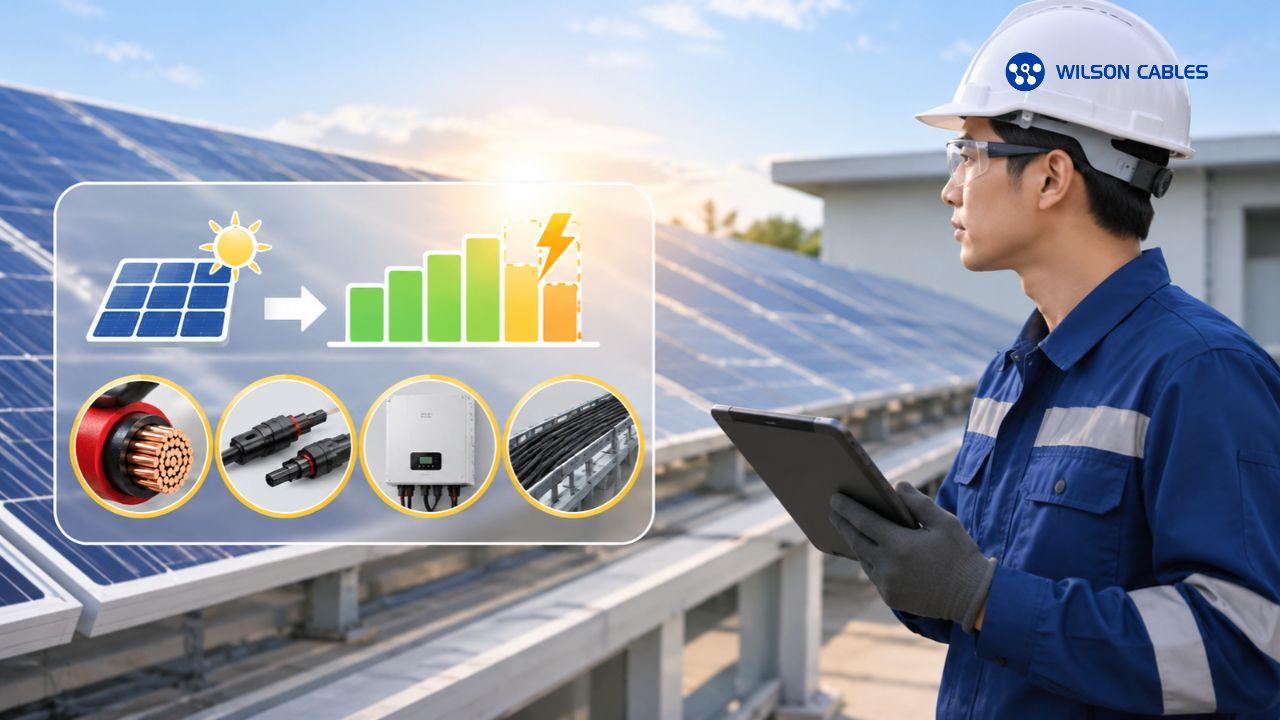
In a solar panel system, not all of the electricity your panels produce actually reaches you. Some of it gets lost along the way: as it travels from the panels to the inverter (the box that turns solar power into the kind of electricity your home uses), and then on to your appliances or the power grid.
This is called power loss. How much power is lost depends on several things, from the panels themselves and how well the inverter works, to the quality of the cables and connections.
One thing that deserves attention when planning a solar installation is choosing the right cable. The cable’s thickness, how long it runs, what metal is inside it, and how hot it gets can all affect how much power is lost on the way.
So how do you reduce power loss in a solar panel system? Below, we explain what causes it and the practical steps you can take to get more of your solar energy where it needs to go.
Power loss is electricity that gets wasted while it is being produced, carried, or converted inside an electrical system.
In a solar system, this can happen in several places: in the solar panels, in the cables that carry power from the panels, in the connectors, in the inverter, and in the cables that carry power from the inverter into your home.
Common sources of power loss in a solar system include:
Each part loses power in its own way. On the cable side, though, the main thing to watch is how easily electricity can flow through the metal inside the cable.
To learn more about the cables used in solar installations, read our guide on what solar cables are and how to choose them.
A cable’s job is to carry electricity from one part of the system to another. As electricity flows, the metal inside the cable pushes back a little, and part of the energy turns into heat.
How much power is lost doesn’t depend only on the type of cable. These factors matter too.
The thickness of the metal core inside a cable directly affects how easily electricity flows. Think of it like a water pipe: a thinner pipe lets less water through. For cables of the same material and length, the thinner the cable, the harder it is for electricity to pass.
If a cable is too thin for the amount of electricity it needs to carry, more power is lost. The cable can also run hotter.
That is why choosing the right cable size means considering how much electricity it needs to carry, how far it runs, where it is installed, and how much voltage drop (loss of electrical “pressure” along the way) is acceptable.
For more on these factors, see our guide on how to choose the right solar panel cable.
Cable length matters as well. The longer the distance electricity has to travel, the more effort it takes, and the more power is lost.
In a solar installation, this can happen when the panels are a long way from the inverter.
For the panel side of the system, remember to count both the positive and the negative cable. So if the panels are 20 meters from the inverter, electricity actually travels about 40 meters in total.
Planning where each part of the system goes from the start helps keep cable runs short and reduces power loss.
The metal inside a cable affects how well it carries electricity. Different metals let electricity through more or less easily, even at the same thickness and length.
Copper is widely used in electrical cables because it carries electricity very well. Tin-coated copper adds extra protection against rust and corrosion, which is helpful for cables used outdoors.
Besides the metal itself, how well the cable is built and whether it matches its stated specifications also matter. You can learn more about why copper is so widely used in electrical cables.
Make sure the cable you use comes with clear technical information and is suitable for solar installations.
As a cable heats up, electricity flows through it less easily, so more power is lost.
On rooftop solar systems, cables are often exposed to direct sunlight and sit close to hot roof surfaces.
Besides the weather, the way cables are installed and bundled together also affects how well they can cool down.
That is why it’s important to check the temperature rating of solar cables, how much electricity they can safely carry, and the conditions where they will be installed.
Power isn’t only lost along the length of the cable. It can also be lost where cables are joined.
A connector that isn’t fitted properly, a poorly pressed (crimped) joint, or a damaged contact can make it harder for electricity to pass through.
As a result, heat can build up at that one spot and increase the risk of damaging the connector or the cable’s outer covering.
Using connectors that are designed to work together, and fitting them according to the manufacturer’s instructions, is an important part of keeping the system reliable.
To learn more about connection problems, read our article on why MC4 connectors get hot and how to prevent it.
Now that you know the causes, here are some steps you can take to reduce power loss in your solar system.
Choosing the right cable size is one of the most important ways to reduce power loss.
For cables of the same material and length, a thicker cable usually lets electricity flow more easily.
That doesn’t mean you should always use the thickest cable available. The right size depends on how much electricity flows, how long the cable runs, how much it can safely carry in real installation conditions, and how much voltage drop is planned for.
The longer the cable, the more power is lost along the way.
So plan carefully where to place the solar panels, the combiner box (a box where several panel cables are joined together), and the inverter, so that cables don’t have to travel too far.
Even so, a shorter cable route must still allow for safety, easy access for maintenance, and installation rules.
The metal inside a cable affects how easily electricity flows and how much the cable can carry.
Using copper cables with the right specifications helps your solar system deliver its power more efficiently.
Besides the metal, make sure the cable’s thickness, electrical performance, and construction match what your system needs.
High temperatures make it harder for electricity to flow. So when installing cables, consider sun exposure, how hot the roof gets, airflow, and how cables are bundled together.
Avoid installation methods that trap heat or that go beyond what the cable is designed to handle.
Also check the temperature rating on the cable’s datasheet (its technical information sheet) to make sure it suits the conditions on site. Resistance to sunlight should be checked separately too. Learn why solar cables must be UV resistant.
The quality of each joint also affects how much power your solar system loses.
Use connectors that are designed to work with your cables and equipment. Make sure crimping (pressing the metal end onto the cable), fitting the cable ends, and locking the connectors are all done according to the manufacturer’s instructions.
Good joints help electricity pass through smoothly and reduce the risk of overheating.
Regular checks help catch small problems before they turn into bigger ones.
Things to check include the cable’s outer covering, connectors, cable ends, joints, and any signs of overheating.
A technician can use the right measuring tools to check the system. If they find melted connectors, damaged cable covering, or unusual joints, these should be repaired before the system is switched back on.
Cables play a big part in how efficiently your solar system delivers power. So don’t choose a cable based only on price or thickness.
For the cables that run from the panels, it’s worth using cables made specifically for solar panels. They are designed to handle the conditions solar installations face, including strong sunlight (UV), changing temperatures, and outdoor use.
One widely used type is H1Z2Z2-K, which follows the EN 50618 standard for solar cables (a European standard for solar cables) and is rated for up to 1.5 kV DC.
Wilson Cables offers H1Z2Z2-K Solar Cable with tin-coated copper inside and a tough XLPO (cross-linked polyolefin) covering. It is designed for solar installations, with resistance to sunlight, heat, and outdoor conditions.
Even so, using the right cable still needs to go hand in hand with choosing the right size, planning the cable route, checking how much electricity it can carry, and installing it properly, so that power loss stays under control.
Learn more about the options and specifications of Wilson H1Z2Z2-K Solar Cable for solar panel installations.
Power loss is electricity that gets wasted as it travels through a solar panel system. How much is lost depends on several things, mainly how easily electricity flows through the cable, how thick the cable is, how far it runs, how hot it gets, and the quality of the joints.
To reduce power loss, choose cables that suit the amount of electricity and the installation conditions. Planning cable routes well, using connectors that are made to work together, and checking the system regularly also help keep it efficient and reliable.
If you are planning a solar panel installation or reviewing the cables for a solar project, Wilson Cables offers solar cable solutions that can be matched to your system. Talk to us about the right cable to help your system deliver its power at its best.
What are the main causes of power loss in a solar panel system?
Power loss can come from several things, such as cables that resist the flow of electricity, poor joints, inverter efficiency, panel temperature, and the surrounding environment. For cables, the most important factors are how long they run, how thick they are, and the metal they are made of.
How is power loss in a solar cable calculated?
Technicians use a simple formula: P = I² × R. In plain terms, the power lost equals the amount of electric current multiplied by itself, then multiplied by how much the cable resists the flow of electricity. To work out that resistance, they need to know the cable’s metal, its total length, and its thickness.
Does cable size affect solar panel efficiency?
Yes. Cable size affects how efficiently power travels from the panels to the inverter. A cable that is too thin makes it harder for electricity to flow, which increases voltage drop and power loss.
What is the ideal voltage drop limit for a solar installation?
The acceptable voltage drop (the loss of electrical “pressure” along a cable) depends on the system design, the installation standards that apply, and the project’s requirements. There is no single number that fits every solar installation, because the panel side and the home side of the system may have different needs.
Can good-quality solar cables reduce power loss?
Using solar cables with the right metal and the right size helps electricity flow more easily and reduces power loss. But results also depend on cable length, temperature, connectors, and how well the system is installed.
|
Wilson Cables is a trusted electrical cable brand produced by PT. Willson Surya Unggul, a cable manufacture company in Tangerang, Indonesia, which has been established since 1989. Since the beginning, we have been fully committed to producing high quality cables with a choice of products from building cables, automotive cables, audio cables, electronic cables, to cables for use. special.
|
Our Location
Jl. Veteran No.9A, Kadu Jaya, Kec. Curug, Tangerang, Banten 15810
 021-5986868 / 0856-8686868
|
Sitemap
|
Download Our Product Catalog
Download |

|


