
  |

|
 SHOP NOW |

|
|

|
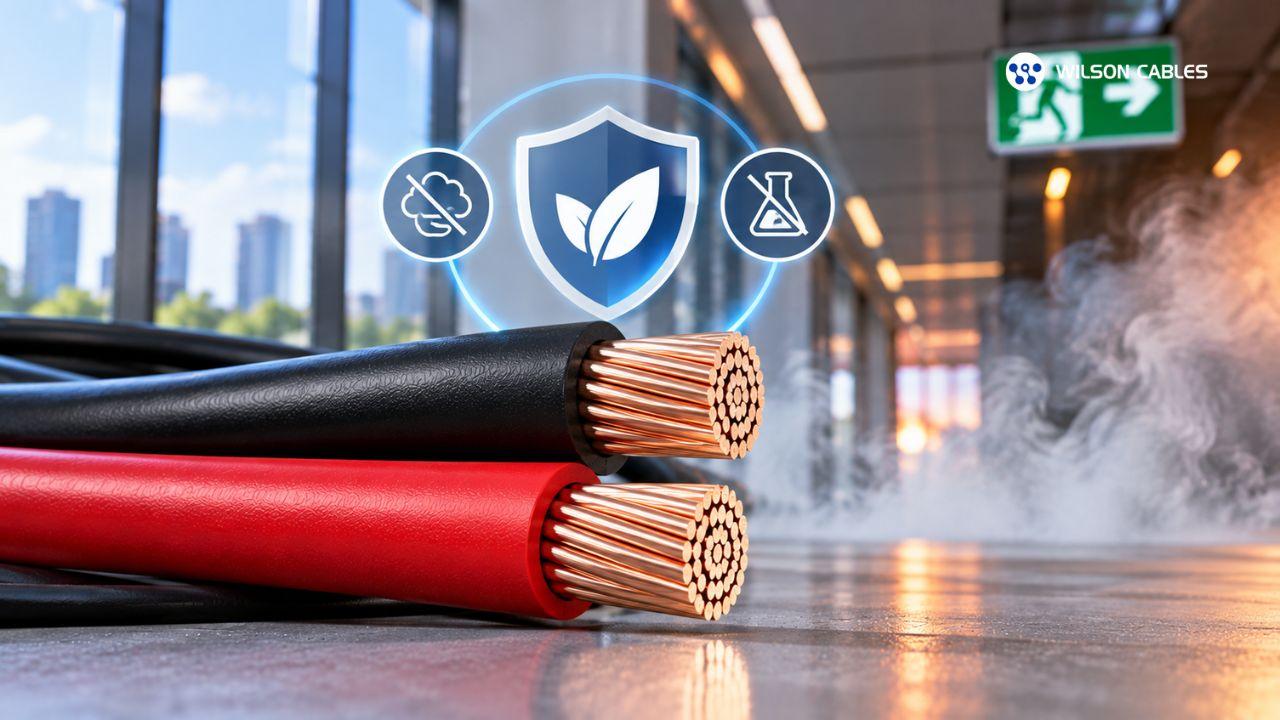
When choosing electrical cable, most people look at conductor size, current capacity, or price. Yet the insulation material also plays a major role in how safe an electrical installation really is.
One term you will often see on modern cable specifications is LSZH, short for Low Smoke Zero Halogen. The material is now used in many types of cable, including cable for high rise buildings, hospitals, data centres, and solar power systems.
So what exactly is LSZH? And why is it considered safer than conventional insulation materials? Here is the full explanation.
LSZH stands for Low Smoke Zero Halogen. It is a cable insulation and sheathing material designed to produce very little smoke and to release no toxic halogen gas when it burns.
Materials based on Polyvinyl Chloride (PVC) behave differently. When PVC burns, it can produce thick smoke and corrosive gas. LSZH is formulated to improve safety for the people inside a building, and to protect electronic equipment from damage caused by corrosive gas.
Because of that behaviour, LSZH cable is now widely used in installations that follow high safety standards.
LSZH does more than protect the conductor. It adds a layer of protection for the moments that matter most, such as a fire.
The main advantage of LSZH is that it generates far less smoke than conventional insulation materials.
Less smoke means better visibility, which makes evacuation safer.
Halogen based materials such as PVC can release harmful gas when they burn. That gas is dangerous to people, and it can also corrode electronic equipment.
LSZH is designed to minimise that risk, which makes it safer for many types of building.
In an emergency, thick smoke is one of the biggest obstacles to getting people out of a building.
By producing less smoke, LSZH cable helps people find the way out more easily.
Corrosive gas from some insulation materials can damage electrical panels, servers, control devices, and other electronics.
LSZH cable helps reduce that risk, which makes it a strong fit for facilities filled with high value electronic equipment.
Both are used as cable insulation, but they behave very differently.
|
Property |
LSZH |
PVC |
|
Smoke when burning |
Very little |
More |
|
Halogen content |
Halogen free |
Contains halogen |
|
Toxic gas |
Very low |
Higher |
|
Corrosive gas |
Very low |
Higher |
|
Flame retardant |
Generally better |
Depends on the formulation |
|
Evacuation safety |
Better |
More limited |
|
Typical use |
Public buildings, data centres, solar power systems |
General electrical installation |
The table shows that LSZH offers a higher level of safety, especially in buildings with many occupants or critical electronic equipment.
LSZH was developed to reduce the risks that appear when a fire breaks out.
When cable is caught in a fire, LSZH material produces less smoke, so visibility around the area stays better.
That makes emergency response more effective.
In high rise buildings, hospitals, shopping centres, and other public facilities, evacuation has to happen as fast as possible.
LSZH cable reduces the obstruction caused by thick smoke, so escape routes stay easier to see.
Facilities such as data centres, server rooms, industrial control rooms, and telecommunication hubs are full of electronics that are sensitive to corrosive gas.
LSZH material helps minimise the risk of damage to that equipment in a fire.
Corrosive gas is not only dangerous to people. It can also damage control panels, switches, communication systems, and other electronic components.
Because LSZH does not release significant halogen gas, it helps limit that kind of damage.
Thanks to its safety profile, LSZH cable is used across many types of installation.
Hospitals need a safe electrical system, because the building is used by many patients and medical staff.
Airports are busy public facilities, so they need cable material that supports safe evacuation.
Mass transport systems use LSZH cable to improve passenger safety in an emergency.
Data centres hold many servers and critical electronic devices that need protection from corrosive gas.
High rise buildings commonly use LSZH cable to raise the safety standard of the electrical installation.
Modern solar cable also uses LSZH material widely. It adds fire safety protection while supporting long term outdoor use.
Industrial facilities use LSZH cable in the areas that call for a higher level of safety.
Not every one. But most modern solar cable designed to meet international standards now uses LSZH material as part of a wider safety upgrade.
One widely used standard is H1Z2Z2-K, which typically combines the following properties:
Before choosing solar cable, make sure you understand the materials used, so the cable matches the needs of your installation.
Wilson Cables offers H1Z2Z2-K Solar Cable, built for solar panel installations of all sizes, from residential rooftop systems to commercial and industrial projects.
The cable uses Cross-linked Polyolefin (XLPO) material, which resists UV light and extreme temperatures, and it is supported by Low Smoke Zero Halogen (LSZH) and flame retardant properties for better electrical safety.
Double insulation construction adds a further layer of protection, so the cable can perform reliably outdoors over the long term.
Want the full specifications? Explore the Wilson H1Z2Z2-K Solar Cable range to help you choose the right cable for your solar panel installation.
LSZH, or Low Smoke Zero Halogen, is a cable insulation material built to improve safety. It produces far less smoke and keeps the release of toxic halogen gas to a minimum when a fire occurs.
Compared with conventional materials such as PVC, LSZH offers better protection for both the people in a building and the equipment inside it. That is why it is widely used in hospitals, airports, data centres, high rise buildings, and modern solar power systems.
If safety is a priority in your installation, cable with LSZH material is a strong choice for an electrical system that is safe, reliable, and built to last.
What is LSZH?
LSZH stands for Low Smoke Zero Halogen. It is a cable insulation material that produces very little smoke and releases no harmful halogen gas in a fire.
What does LSZH stand for?
LSZH is short for Low Smoke Zero Halogen.
What does LSZH do in a cable?
It improves safety by reducing smoke, minimising toxic and corrosive gas, and helping to protect both building occupants and electronic equipment during a fire.
What is the difference between LSZH and PVC?
The main difference is how they behave when they burn. LSZH produces less smoke and contains no halogen, while PVC can produce thicker smoke and corrosive gas.
Is LSZH fireproof?
LSZH material is generally flame retardant, which means it helps slow the spread of fire. It is important to know that flame retardant is not the same as fire resistant. Flame retardant material slows the spread of flame. It does not guarantee that the cable will keep working while exposed to fire for a set period.
Does solar cable use LSZH?
Most modern solar cable does, especially cable that meets the H1Z2Z2-K standard, because it delivers a better level of safety for outdoor solar panel applications.
|
Wilson Cables is a trusted electrical cable brand produced by PT. Willson Surya Unggul, a cable manufacture company in Tangerang, Indonesia, which has been established since 1989. Since the beginning, we have been fully committed to producing high quality cables with a choice of products from building cables, automotive cables, audio cables, electronic cables, to cables for use. special.
|
Our Location
Jl. Veteran No.9A, Kadu Jaya, Kec. Curug, Tangerang, Banten 15810
 021-5986868 / 0856-8686868
|
Sitemap
|
Download Our Product Catalog
Download |

|


