
  |

|
 SHOP NOW SHOP NOW |

|
|

|
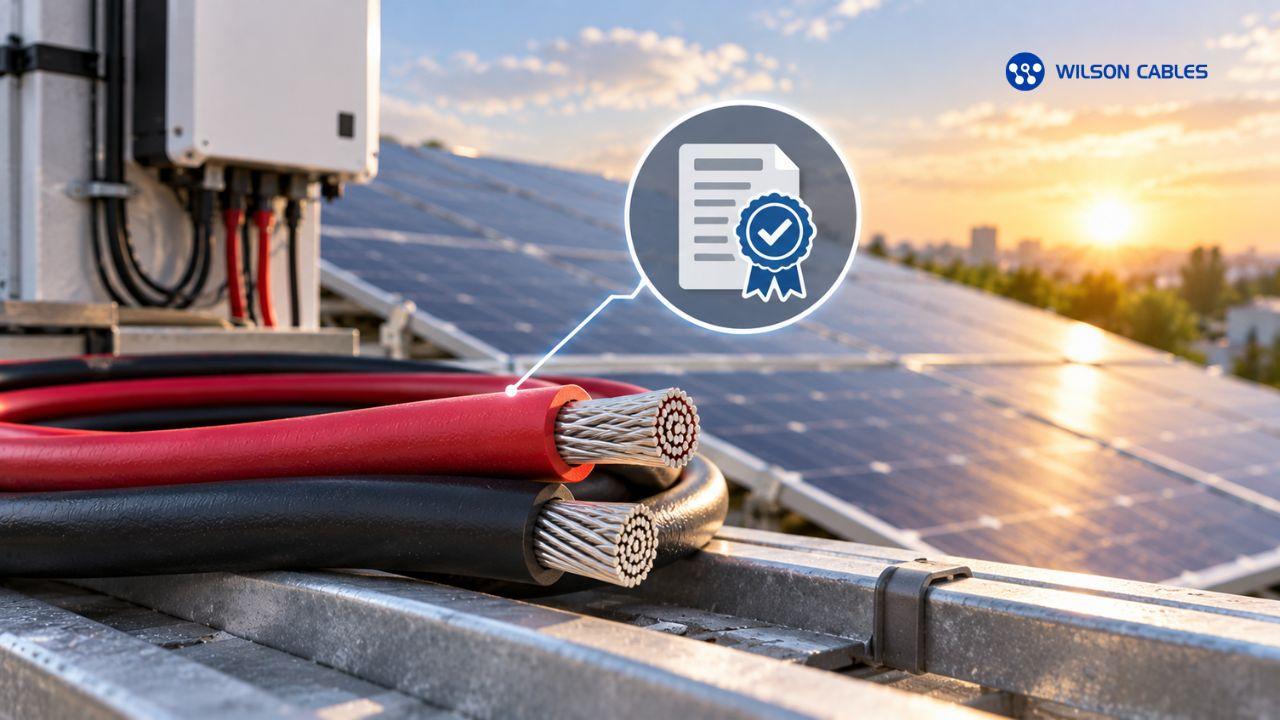
The use of solar power systems (PLTS) keeps growing, in homes, in commercial buildings, and in large-scale power plants. In a photovoltaic (PV) system, the cable is one of the important parts, because it carries the electricity produced by the solar panels.
But a cable for a solar panel system cannot be chosen based on how well it carries electricity alone. A PV cable also needs to cope with sunlight, changes in temperature, moisture, and long-term outdoor use.
One standard you will often see on solar cables is EN 50618. So what is EN 50618, and what makes it important for solar panel cables?
EN 50618 is a European Standard that sets the requirements for electrical cables used in photovoltaic (PV) systems, mainly on the direct current (DC) side. The standard covers flexible single-core power cables that use cross-linked insulation and sheathing, and that have low smoke and halogen-free characteristics.
EN 50618 was written with the working conditions of PV cables in mind, since those cables can be exposed to the outdoors for many years. That is why its requirements are not only about how the cable performs electrically, but also about its mechanical and thermal characteristics and how well it stands up to environmental conditions.
The standard also covers cables with a nominal DC voltage of up to 1.5 kV, both between the cables themselves and where the cable is in contact with the ground. In normal use, the maximum conductor temperature is set at 90°C.
In other words, EN 50618 is not the name of a cable type. It is a standard that sets specific requirements for cables used in photovoltaic systems.
Cables in a solar installation work under different conditions from cables used in an ordinary building electrical installation. Some PV cables are installed in open areas, so they can be exposed to sunlight, rain, temperature changes, and other environmental conditions.
Because of this, the cable used needs characteristics that match what a photovoltaic system requires.
EN 50618 sets requirements aimed specifically at PV cables, covering material characteristics, construction, testing, and use in outdoor conditions. The standard also assumes normal use with an expected service life of at least 25 years under the conditions it defines.
It is important to understand that meeting EN 50618 does not automatically make an entire solar installation safe. System design, choosing the right cable size, installation method, connectors, protection, grounding, and the installation as a whole still need attention.
EN 50618 sets a number of requirements that make the cables it covers suitable for what a photovoltaic system needs.
Cables covered by EN 50618 are intended mainly for the DC side of photovoltaic systems. They can be used in circuits such as the connections between PV modules and the DC runs within a solar panel system, according to how they are installed.
This matters because the electricity produced by solar modules, before it reaches the inverter, is in the form of DC current.
EN 50618 requires cross-linked material for the cable’s insulation and sheath. These layers protect the conductor and help the cable work under the environmental and temperature conditions that form part of the standard’s requirements.
This construction is one of the important things that sets a PV cable apart from a cable used for general installation work.
Cables within the scope of EN 50618 have low smoke zero halogen (LSZH) characteristics. That means the cable materials are designed to produce little smoke and to avoid halogen materials in the formulation the standard requires.
This is one of the safety considerations when a cable is used in an electrical installation, particularly in a fire.
EN 50618 covers flexible single-core cables. Flexibility matters in a PV system because cables have to be routed and connected to modules and other components in many different configurations.
The standard also sets requirements for how the conductor is constructed, including the use of copper conductors built to the EN 60228 standard.
If you have ever seen H1Z2Z2-K written on a solar cable, that code is not simply a product name. H1Z2Z2-K is the code designation set out in EN 50618 for cables covered by the standard.
EN 50618 also requires certain markings on the sheath, including the manufacturer’s identity, the H1Z2Z2-K designation, and the conductor size.
So when you find a cable marked H1Z2Z2-K, that information can be one clue to the cable’s specification and intended use. Even so, it is still important to check the product datasheet and technical documents to confirm any claim of compliance with the standard.
One of the important specifications in EN 50618 is that the cable can be used in systems with a nominal DC voltage of up to 1.5 kV, both between conductors and between a conductor and earth. For use on AC systems, the standard lists a rating of 1.1 kV.
On temperature, the cable is designed to work with a maximum conductor temperature of 90°C in normal conditions. In certain conditions, a conductor temperature of up to 120°C is allowed, for a total of no more than 20,000 hours across the cable’s service life, within the ambient temperature limits the standard sets.
These characteristics matter because cables in a solar installation can sit in high-temperature surroundings, especially when they are installed on a roof and exposed to the sun.
Cables that meet the requirements of EN 50618 can be used in various parts of the DC side of a photovoltaic system, according to the design and the installation conditions.
Some examples include:
EN 50618 was indeed developed for PV cables that can be used permanently in outdoor and demanding conditions.
EN 50618 is a European standard that sets the requirements for cables used in photovoltaic systems, mainly on the DC side. The standard covers a range of requirements around construction, materials, electrical characteristics, testing, and use of the cable in outdoor conditions.
Some of the key characteristics that form part of EN 50618 are single-core construction, flexibility, low smoke halogen-free material, and cross-linked insulation and sheathing. Cables covered by this standard also carry the designation H1Z2Z2-K and are designed for PV systems with a nominal DC voltage of up to 1.5 kV.
Understanding EN 50618 helps users, designers, and contractors recognise the specification of a solar cable that suits their installation. Even so, the cable standard still needs to be considered together with the system design, installation method, cable size, protection, and the overall requirements of the solar installation.
What is EN 50618?
EN 50618 is a European standard that sets the requirements for electrical cables used in photovoltaic systems, mainly on the DC side.
What does EN 50618 do for a solar cable?
EN 50618 sets the requirements for construction, materials, electrical characteristics, and testing of cables intended for photovoltaic applications, so the cable can be used according to its conditions and purpose.
How is EN 50618 related to H1Z2Z2-K?
H1Z2Z2-K is the code designation set out in EN 50618 for cables covered by the standard.
Are EN 50618 cables suitable for solar panels?
Yes. EN 50618 is intended for cables used in photovoltaic systems, mainly on the DC side. Even so, the cable specification still has to match the voltage, current, installation method, and needs of the system.
What is the difference between EN 50618 and IEC 62930?
EN 50618 is the European standard for photovoltaic cables, while IEC 62930 is the international standard for photovoltaic cables rated up to 1.5 kV DC. The two are closely related in technical scope, but they are different standards.
|
OTHER NEWS
|
|
Wilson Cables is a trusted electrical cable brand produced by PT. Willson Surya Unggul, a cable manufacture company in Tangerang, Indonesia, which has been established since 1989. Since the beginning, we have been fully committed to producing high quality cables with a choice of products from building cables, automotive cables, audio cables, electronic cables, to cables for use. special.
|
Our Location
Jl. Veteran No.9A, Kadu Jaya, Kec. Curug, Tangerang, Banten 15810
 021-5986868 / 0856-8686868
|
Sitemap
|
Download Our Product Catalog
Download |

|


