
  |

|
 SHOP NOW |

|
|

|
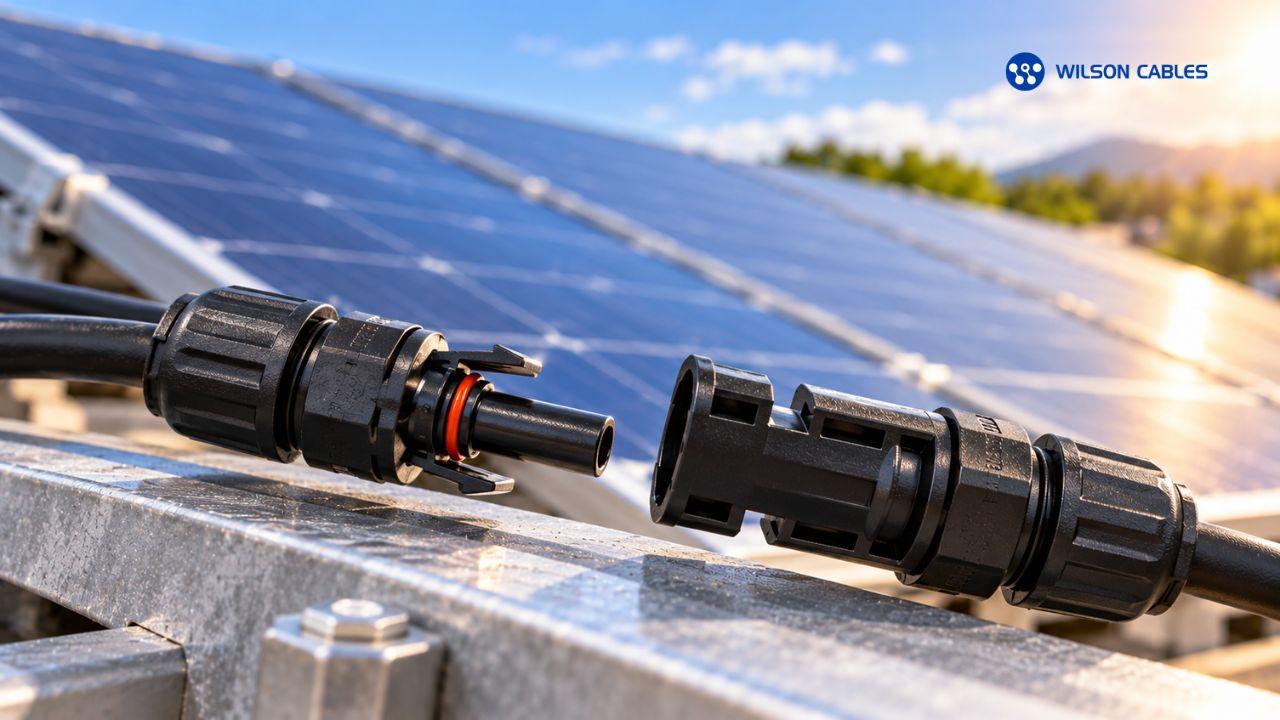
The MC4 connector is a small but important part of a solar panel installation. It joins the electrical path that carries energy from the panels to the rest of the system, so the quality of that joint deserves attention.
An MC4 connector gets hot when resistance at the joint goes up, when current is higher than the component can handle, or when site conditions make the connector work harder. Poor crimping, mismatched connector pairs, and damaged contacts can all trigger the problem.
Understanding why an MC4 overheats helps you keep a solar power system reliable. Below is a clear look at what the connector does, what makes it overheat, what the consequences are, and how to prevent it.
MC4 is the name of a family of electrical connectors for photovoltaic applications, and it is also a registered trademark of Staubli. In everyday use, people often use the term for any solar panel connector that looks like an MC4.
The connector joins components in the direct current, or DC, side of a solar power system. A good connection keeps electrical contact stable and protects the contact parts, as long as the product is used according to its design and specification.
Be careful with one point. A connector sold as MC4 compatible is not automatically safe to pair with a genuine MC4 or with another brand. The fact that two connectors fit together physically does not prove they are electrically and mechanically compatible.
On connectors that use a crimp terminal, the end of the cable conductor is pressed into a metal terminal with a special tool. That process has to produce a firm joint and good electrical contact.
A loose crimp leaves a poor contact. On the other side, the wrong tool or the wrong setting can damage the terminal or the conductor strands.
Use the crimping tool, terminal, and cable size specified by the manufacturer. Choosing a tool simply because it can squeeze the terminal is not enough.
A connector that is not pushed fully home cannot make electrical contact the way it was designed to. A lock that is not properly engaged also leaves the joint more likely to shift.
Check the assembly using the manufacturer procedure, including confirming that the lock is engaged and the connector pair is properly seated. Do not judge the quality of a joint from its outside appearance alone.
Two connectors can look identical and click together, yet differ in dimensions, materials, or contact design. Those differences affect the quality of the joint.
Staubli warns that mating connectors from different manufacturers increases the technical risk in a photovoltaic system. The MC4 compatible label on its own is not evidence that the pair has been tested together.
Use connector pairs whose compatibility is confirmed by the manufacturer. Even within the same brand, the product types still need to match.
Every connector has a current capacity set out in its specification. Running it beyond that capacity can generate excess heat.
In a parallel circuit, current from several strings can combine on the output path. The connector at that combining point has to be chosen for the current that actually flows through it, not for the current of a single panel.
Check the datasheet for the connector type you are using. Ratings can depend on the product configuration, the conductor size, and the operating conditions. One current figure does not apply to every MC4.
Cable selection has to account for current carrying capacity and for compatibility with the connector. A cable that does not suit the system adds power loss and heating along the run.
At the joint, the conductor cross section has to match the terminal. The outer diameter of the cable also has to fall within the range of the seal and cable gland, so the protection built into the connector works as intended.
If you move up to a larger cable, the terminal and connector have to be changed to suit. Forcing a cable into a terminal that does not fit creates a new problem.
Dirt and corrosion interfere with the electrical contact surface. Water that gets in through a damaged seal or poor assembly also speeds up the decline of the joint.
Protect unmated connectors from contamination. Never mate a dirty contact, and do not assume a connector is waterproof in every installation condition.
If damage is found, a technician needs to assess the condition of the contact and its protection before the system goes back into service.
Pulling on the cable or repeated movement puts load on the joint. Good cable management keeps that mechanical force away from the contact parts.
Connectors on a rooftop also face high ambient temperatures. That adds thermal load on top of the heat the joint already produces from the current flowing through it.
Component selection and cable routing therefore need to account for site conditions. Even a correctly specified connector still needs correct installation.
Excess heat at a connector affects both the performance and the reliability of a solar power system. The effects include:
Do not pull the connector apart to inspect it. A connector must never be disconnected while load current is flowing, because doing so can create an electric arc.
Ask a competent technician to shut down and isolate the system following the correct procedure. Switching off the inverter alone does not guarantee that the whole DC side is free of voltage, especially while the panels are still exposed to light.
Once the working conditions are confirmed safe, the technician can inspect the connector pair, the quality of the crimp, the condition of the cable, and whether the operating current is appropriate. The root cause has to be corrected before the system is restarted.
A melted or damaged connector needs to be replaced, not patched up and reused. After the repair, run another check so that problems at other joints are not missed.
Prevention starts at the planning stage. Choose components based on the system specification, then make sure the installation follows the manufacturer instructions.
Key steps to follow:
For more on how to select cable, read our guide on how to choose the right solar panel cable.
An MC4 connector can get hot because joint resistance has increased, because current exceeds the capacity of the component, or because installation conditions add to the thermal load. Crimp quality, connector compatibility, contact condition, and cable selection all play a part in keeping the system reliable.
To avoid problems, use suitable components and have the work carried out by a competent technician. If you are planning an installation or reviewing the cable requirements for a solar project, contact Wilson Cables to discuss the needs and specifications of your system.
Is a warm MC4 connector always a problem?
Not always. The condition of a joint should be assessed against its specification and operating conditions. Do not use the touch of a hand as the basis for deciding whether a connector is safe.
Can any connector labelled MC4 compatible be mated with an MC4?
No. That label does not automatically prove compatibility with another connector. Use pairs that the manufacturer has confirmed as suitable.
Will moving up to a larger cable always fix an overheating MC4?
No. If the cause is a poor crimp, a damaged contact, or an incompatible connector pair, changing the cable size alone will not solve it.
Can a melted MC4 connector still be used?
No. A damaged component has to be replaced, and the cause of the damage has to be investigated before the system is put back into operation.
|
Wilson Cables is a trusted electrical cable brand produced by PT. Willson Surya Unggul, a cable manufacture company in Tangerang, Indonesia, which has been established since 1989. Since the beginning, we have been fully committed to producing high quality cables with a choice of products from building cables, automotive cables, audio cables, electronic cables, to cables for use. special.
|
Our Location
Jl. Veteran No.9A, Kadu Jaya, Kec. Curug, Tangerang, Banten 15810
 021-5986868 / 0856-8686868
|
Sitemap
|
Download Our Product Catalog
Download |

|


