
  |

|
 SHOP NOW SHOP NOW |

|
|

|
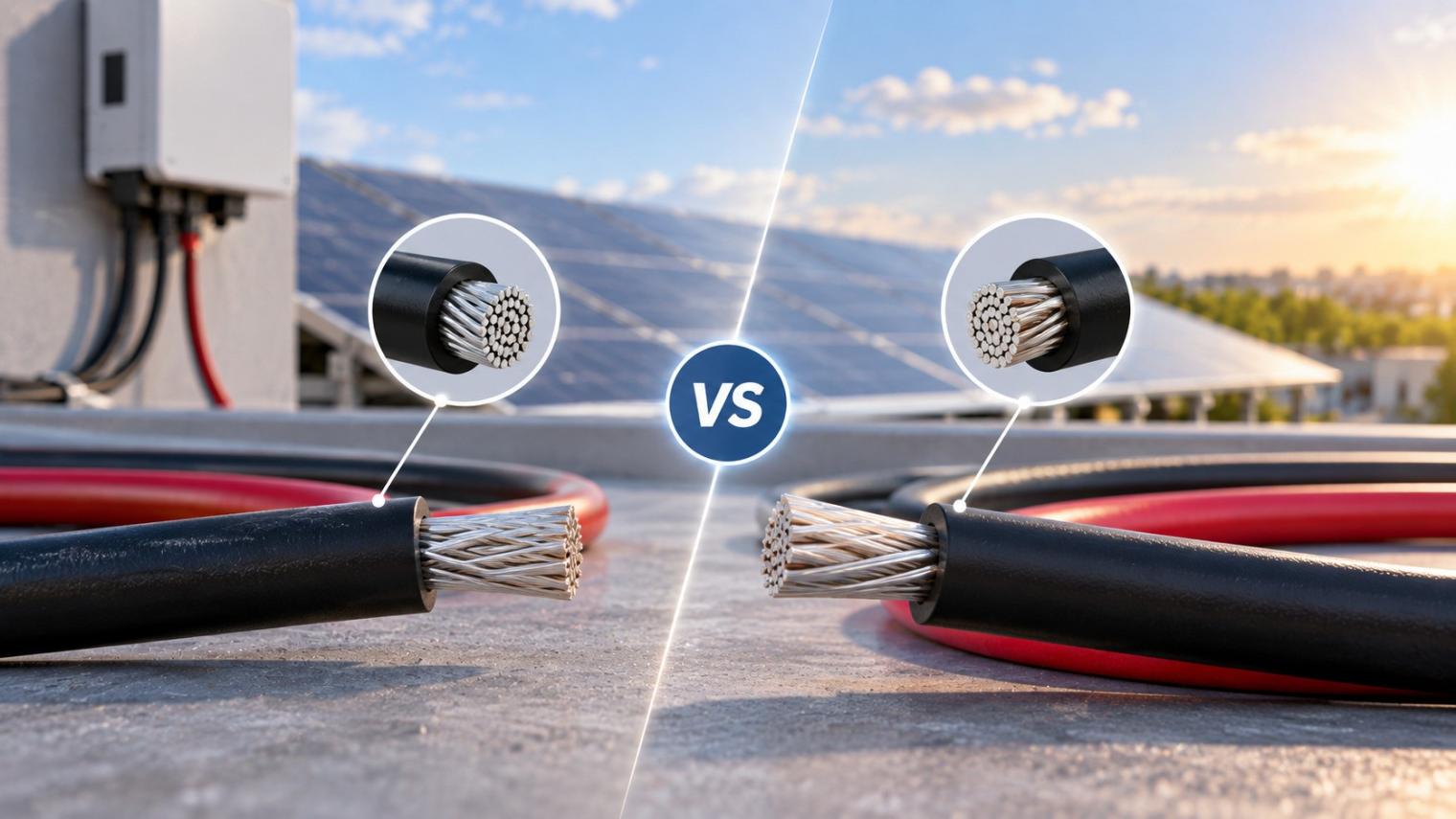
When comparing solar cables, you will probably come across two codes that show up quite often: H1Z2Z2-K and PV1-F. They look almost the same, both usually have a single core, and both are sold for connecting solar panels to other parts of the system on the DC side (the part of the system that carries electricity straight from the panels, before it is converted for everyday use).
This makes it easy to assume they are simply two names for the same product. In fact, each code refers to a different set of specifications.
For homeowners, the difference may seem too technical to matter. For installers and contractors, however, it can affect whether the cable suits the system design and voltage, whether it meets the project documents, and even whether the product is accepted during inspection.
PV1-F is a type of cable developed specifically for photovoltaic (solar power) installations. It is widely used to connect solar panels, junction boxes, combiner boxes, and inverters, meaning the panels themselves, the boxes where their cables are joined, and the device that converts solar power into electricity a building can use.
PV1-F generally uses a flexible copper conductor (the metal core that carries the electricity) with insulation and an outer jacket designed for outdoor use. It is built to withstand UV rays from sunlight, ozone, moisture, and changes in temperature, which makes it suitable for solar panel installations.
PV1-F generally follows the TÜV 2 PfG 1169/08.2007 standard, one of the standards widely used for earlier generations of solar cable.
PV1-F is a code commonly found on earlier-generation solar cables. Products with this code usually follow the TÜV Rheinland testing specification 2 PfG 1169/08.2007, which was written specifically for cables used in solar power systems. (TÜV Rheinland is a German testing and certification body.)
In its day, PV1-F gave the industry a clearer reference point than simply using ordinary electrical cable for solar panel installations.
That said, it is not accurate to assume every cable marked PV1-F has identical specifications. The voltage rating, temperature range, resistance to weather, and construction details still need to be checked in each product’s datasheet (the manufacturer’s technical specification sheet) and test documents.
The H1Z2Z2-K Solar Cable is designed specifically to support a wide range of solar panel installations, from home rooftop systems to commercial and industrial projects.
This cable has a number of features that make it suitable for outdoor use, including resistance to UV rays, extreme temperatures, and moisture. It also uses a double insulation construction (two protective layers around the core) to improve system safety. On top of that, the cable is flame retardant and Low Smoke Zero Halogen (LSZH), meaning it slows the spread of fire and gives off little smoke and no toxic halogen gases if it does burn. This provides extra protection in an emergency.
H1Z2Z2-K is a solar cable developed to meet the growing demands of modern solar systems, particularly when it comes to voltage rating and resistance to environmental conditions.
It usually uses a flexible copper conductor with insulation and an outer jacket made of XLPO (cross-linked polyolefin, a tough and heat-resistant insulating material), and is designed for long-term outdoor use.
H1Z2Z2-K generally follows EN 50618, the European standard for solar cables, and is rated for up to 1.5 kV DC (1,500 volts of direct current). This makes it suitable for many modern solar systems that operate at higher DC voltages.
The easiest difference to understand is the standard each cable follows and how the cable design has evolved.
PV1-F is a type of solar cable that has been widely used in solar panel installations. H1Z2Z2-K, on the other hand, follows the EN 50618 standard, which was developed to meet the needs of modern solar cables, including systems with voltage ratings of up to 1.5 kV DC.
So for modern solar installations with higher system voltages, H1Z2Z2-K can be the more suitable choice, as long as all of the cable’s specifications meet the project’s requirements.
The easiest difference to understand is the standard each cable follows and how the cable design has evolved.
PV1-F is a type of solar cable that has been widely used in solar panel installations. H1Z2Z2-K, on the other hand, follows the EN 50618 standard, which was developed to meet the needs of modern solar cables, including systems with voltage ratings of up to 1.5 kV DC.
So for modern solar installations with higher system voltages, H1Z2Z2-K can be the more suitable choice, as long as all of the cable’s specifications meet the project’s requirements.
Solar cable should be chosen to match the needs of the installation, so the system can perform at its best.
Here are some things to pay attention to:
Know the maximum voltage, the current, how long the cable runs will be, the surrounding temperature, and how the cable will be installed.
Make sure the cable is printed with the manufacturer’s name, the cable code, the cable size (cross-section), and the relevant standard.
The information on the cable, the packaging, the datasheet, and the certificate should all match one another.
Don’t stop at a testing body’s logo printed on the product. If certification is a project requirement, check the certificate number, what it covers, the manufacturer’s name, the product type, and the expiry date if one is listed.
Make sure the cable’s size and outer diameter fall within the range the connector is designed to accept.
Buy from a distributor or seller who can explain where the product comes from and provide its technical documents.
PV1-F and H1Z2Z2-K can both be used as cables for solar power installations. PV1-F is a long-established type of solar cable, while H1Z2Z2-K is the more modern type, based on EN 50618 and rated for up to 1.5 kV DC.
When choosing the right cable, don’t look at the cable type alone. Be sure to consider the voltage rating, how much current the cable can carry, cable size, operating temperature, installation method, UV resistance, and the standards and certifications the project requires.
As solar energy use continues to grow in Indonesia, so does the need for solar cables that are safe, reliable, and able to hold up in outdoor conditions. Understanding the difference between PV1-F and H1Z2Z2-K helps ensure the cable you choose matches the needs of your solar power system.
Wilson Cables offers solar cable solutions designed to support solar panel installations, with close attention to conductivity, flexibility, UV resistance, durability in outdoor environments, and compliance with applicable standards.
By offering the right solar cable options, Wilson Cables is committed to providing solutions that not only support the performance of solar power systems, but also deliver long-term reliability.
See Wilson Cables’ H1Z2Z2-K product information to check the available sizes and technical specifications.
Before buying solar cable, check:
Is H1Z2Z2-K the same as PV1-F?
Not entirely. Both are used in solar power systems, but they follow different specification documents. Product details should still be compared using the datasheets.
Can PV1-F still be used?
It depends on the system design, local regulations, and the project documents. If a project requires EN 50618 or H1Z2Z2-K, PV1-F should not be assumed to meet that requirement automatically.
Is H1Z2Z2-K suitable for every solar panel installation?
Not automatically. The voltage, current, cable size, environment, installation method, and connectors must still match the system design.
Is 4 mm² cable always enough for a home solar system?
Not necessarily. What you need depends on the current, the length of the cable run, temperature, how many cables are bundled together, the installation method, and how much voltage drop is acceptable.
Is H1Z2Z2-K cable heat resistant?
EN 50618 sets temperature requirements and tests for H1Z2Z2-K. However, a product’s actual capability should be checked in its datasheet, and a short-term maximum temperature should not be taken to mean the cable can run at that temperature all the time.
How can I tell whether a solar cable is genuine and meets its stated specifications?
Check the cable markings, the manufacturer’s identity, the datasheet, the certificate number, the scope of testing, and whether the information is consistent across all documents. A certification logo on its own is not enough.
|
Wilson Cables is a trusted electrical cable brand produced by PT. Willson Surya Unggul, a cable manufacture company in Tangerang, Indonesia, which has been established since 1989. Since the beginning, we have been fully committed to producing high quality cables with a choice of products from building cables, automotive cables, audio cables, electronic cables, to cables for use. special.
|
Our Location
Jl. Veteran No.9A, Kadu Jaya, Kec. Curug, Tangerang, Banten 15810
 021-5986868 / 0856-8686868
|
Sitemap
|
Download Our Product Catalog
Download |

|


