
  |

|
 SHOP NOW SHOP NOW |

|
|

|
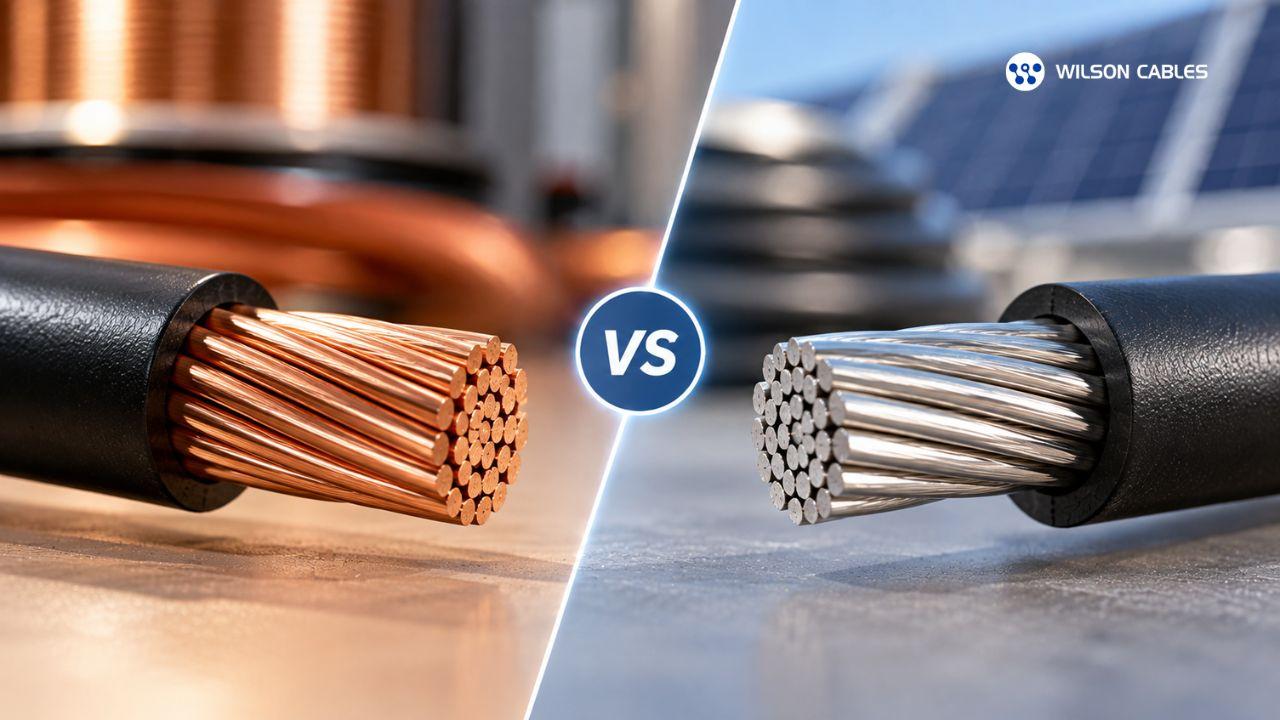
In the world of electrical cables, copper and tinned copper are two types of conductor widely used to carry electric current. Both use copper as their main material, but they differ in how they are built and in the characteristics of their surface.
That difference can affect how well the conductor resists oxidation and corrosion, and how suitable it is for certain environments. So what is the real difference between copper and tinned copper? Here is an easy-to-follow explanation.
Copper (Cu) is one of the most common materials used as a conductor in electrical cables. Copper conducts electricity very well, so it can carry current efficiently.
As well as being highly conductive, copper is relatively flexible and easy to form into different types of conductor, whether solid or stranded.
Because of these characteristics, copper is widely used in many types of electrical cable for building installations, electrical equipment, and other applications.
Even so, copper without an extra coating can still oxidise on its surface when exposed to air and to certain environments. This is something to keep in mind when a cable is used in damp places or in conditions that could cause corrosion.
Tinned Copper (Tin Cu) is a copper conductor whose surface is coated with a layer of tin. In other words, the main conductor material is still copper, but the surface gets extra protection from a layer of tin.
This coating is not there to replace copper’s job of carrying electricity. It is there to give extra protection against the environment. The tin layer helps the conductor surface resist oxidation and corrosion better.
Because of this, tinned copper is widely used in applications that need better protection for the conductor, especially where the cable may be exposed to moisture or to more demanding conditions.
Put simply, the main difference is the coating on the surface of the conductor. Copper uses bare copper, while tinned copper uses copper coated with tin.
|
Description |
Copper |
Tinned Copper |
|
Conductor material |
Copper |
Copper with a tin coating |
|
Electrical conductivity |
Very good |
Very good |
|
Protective coating |
None |
Tin |
|
Corrosion resistance |
Good |
Higher |
|
Oxidation resistance |
Good |
Higher |
|
Damp environments |
Suitable for general use |
Better suited to environments that need extra protection |
|
Conductor colour |
Reddish / copper |
Silver |
|
Cost |
Usually more economical |
Usually higher |
It is worth understanding that tinned copper still uses copper as its main conductor. The tin layer on the surface is extra protection, not a replacement for the copper.
Copper has several strengths that make it so widely used as a material for cable conductors, including:
Despite its many strengths, copper without a coating also has its limits. The surface of copper can oxidise when it is exposed to air and to certain environmental conditions.
In places with high humidity, or in conditions that could cause corrosion, extra protection for the conductor can become an important consideration.
The tin layer gives extra protection to the surface of the copper conductor. Some of its strengths are:
Because of that extra protection, tinned copper can be a suitable choice for cable applications that face certain environmental conditions.
One drawback of tinned copper is that it is more complex to make, because the copper conductor has to be coated with tin.
Because of that extra process, cables with tinned copper conductors can generally cost more than cables with plain copper conductors.
Copper and tinned copper can both be used in many applications, but the conditions where the cable is installed are an important consideration.
Copper is widely used in general electrical installations, such as cables for building installations and various electrical applications that do not need extra protection against corrosive environments.
Tinned copper, meanwhile, can be used in applications that need better resistance to oxidation and corrosion. One example is cable used in places with high humidity or in certain outdoor applications.
In solar cables, or PV cables, tinned copper can also be found, because the cable has to work in an environment where it may face sunlight, moisture, and changing conditions over a long period. Even so, the conductor material still needs to be judged against the specification and standard of the cable being used.
If you look only at how well they carry electricity, copper and tinned copper both use copper as their main conductor material. So both have very good conductivity.
The main difference lies in the protection of the conductor surface. Copper has no tin layer, while tinned copper has an extra layer that helps it resist oxidation and corrosion better.
So it would not be right to say that one of them is always better in every situation. Copper can be the choice for a wide range of general electrical applications, while tinned copper has the advantage when a cable needs extra protection against environmental conditions.
Copper vs tinned copper is essentially a comparison between a copper conductor with no coating and a copper conductor coated with tin.
Copper conducts electricity very well and is widely used across many electrical applications. Tinned copper, meanwhile, has a tin layer that gives extra protection against oxidation and corrosion.
For that reason, choosing a conductor material should not be based only on how well it carries electricity, but also on the environmental conditions and the needs of the application.
What is copper in a cable?
Copper is the material used as the conductor to carry electric current. It is widely used because it conducts electricity very well.
What is tinned copper?
Tinned copper is a copper conductor with a tin coating on its surface. That layer gives extra protection against oxidation and corrosion.
What is the difference between copper and tinned copper?
The main difference is that tinned copper has a tin layer on the surface of the conductor, while copper does not. That layer helps improve protection against oxidation and corrosion.
Does tinned copper conduct electricity well?
Yes. Tinned copper still uses copper as its main conductor material, so it carries electricity very well.
Is tinned copper more corrosion resistant?
In general, the tin layer gives the conductor surface extra protection against oxidation and corrosion compared with copper that has no coating.
Do solar cables use tinned copper?
Some types of solar cable use tinned copper conductors. This can give extra protection against environmental conditions, but the specification of each product needs to be checked to confirm its conductor material.
|
OTHER NEWS
|
|
Wilson Cables is a trusted electrical cable brand produced by PT. Willson Surya Unggul, a cable manufacture company in Tangerang, Indonesia, which has been established since 1989. Since the beginning, we have been fully committed to producing high quality cables with a choice of products from building cables, automotive cables, audio cables, electronic cables, to cables for use. special.
|
Our Location
Jl. Veteran No.9A, Kadu Jaya, Kec. Curug, Tangerang, Banten 15810
 021-5986868 / 0856-8686868
|
Sitemap
|
Download Our Product Catalog
Download |

|


