
  |

|
 SHOP NOW SHOP NOW |

|
|

|
In the world of electricity, electrical cables play a very important role in distributing electrical energy from the source to various devices or installation points. Unfortunately, many people still lack understanding of how to choose the right electrical cable for residential or industrial needs. Yet, mistakes in cable selection can have serious consequences, such as the risk of short circuits, fires, equipment damage, or energy waste.
This article will comprehensively discuss the types of electrical cables, including tips for selecting the right cable and recommendations for high-quality cables by Wilson Cables, ensuring your electrical installation is not only safe but also efficient.
Electrical cables are not just connectors for electrical current. The type, size, and quality of the cable will determine how safe and efficient the electrical flow is in the installation system. Here are some things that can happen if the cable does not meet standards:
Therefore, it is important to understand the types of cables, their characteristics, and selecting the appropriate size according to the electrical load requirements.
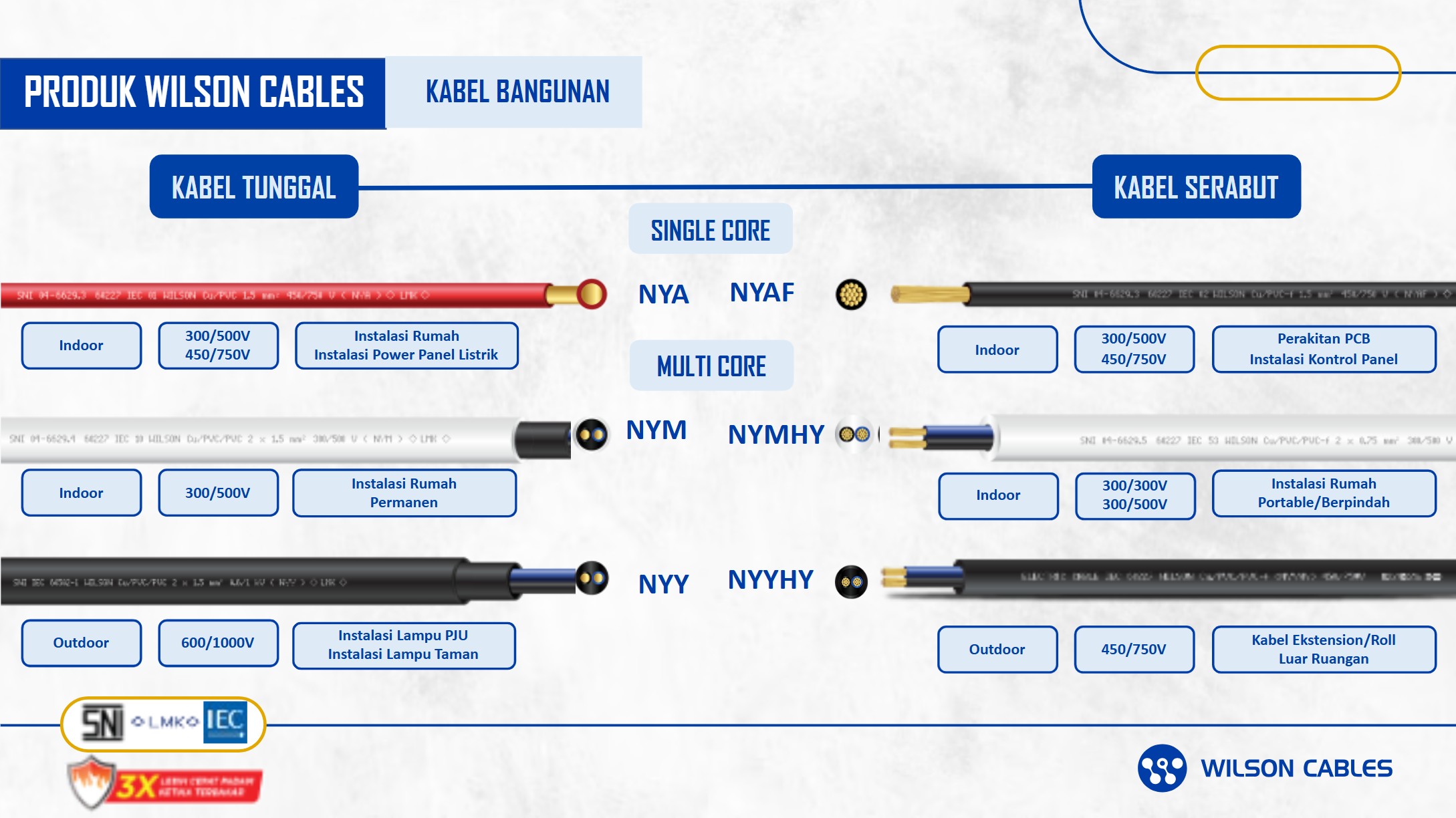
Several types of electrical cables commonly used in homes, buildings, and industries. The table below will help you easily understand the differences in their characteristics and uses.
The first step in choosing a safe electrical cable is to ensure that it has SNI (Indonesian National Standard) certification. This certification indicates that the cable has passed a series of rigorous quality tests in accordance with national safety standards. SNI-certified cables guarantee good copper conductor quality, heat-resistant insulation, and the ability to withstand electrical loads according to their capacity.
The cross-sectional size of the cable determines how much current it can carry. A cable that is too small for a large load can cause overheating, which poses a risk of short-circuiting. For example:
The type of insulation on electrical cables plays an important role in determining the safety, durability, and overall performance of electrical installations. Insulation protects conductors from physical damage, moisture, heat, and prevents current leakage that can cause short circuits or fires.
High-purity copper has excellent electrical conductivity, is heat-resistant, and does not oxidize easily. Cables with pure copper conductors can conduct electrical current more efficiently, thereby reducing the risk of overheating, lowering the potential for power loss, and extending the service life of electrical equipment.
One of the most common mistakes in electrical installation is choosing a cable with a cross-sectional size that does not match the electrical current requirements. Here is a simple guide:
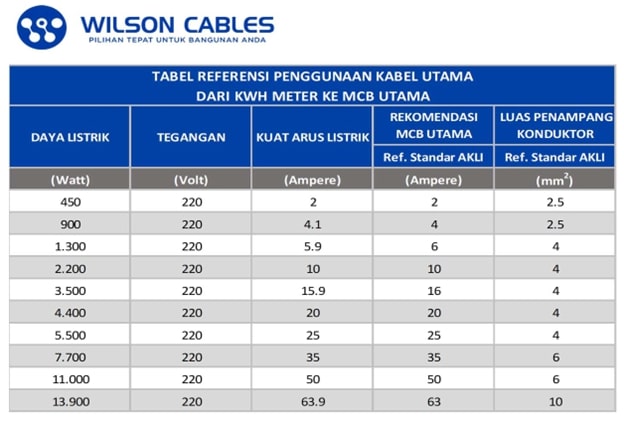
Note: These calculations are general guidelines used for main cable installations in buildings. If you would like recommendations on the appropriate cable type to use, please consult with the Wilson Cables team first.
As a trusted electrical cable manufacturer in Indonesia, Wilson Cables provides various types of cables with pure copper conductors and high-quality insulation. Wilson Cables' electrical cable products meet SNI and ISO 9001:2015 standards and undergo rigorous testing to ensure their suitability and safety.
Wilson Cables offers:
Choosing the right electrical cable is an important step in ensuring that electrical installations in homes and buildings are safe, efficient, and durable. Many electrical problems, such as short circuits, overheating, and even fires, often begin with mistakes in selecting the type or size of cable. Therefore, choosing a cable that suits your power needs and environmental conditions is something that should not be overlooked.
Wilson Cables is here to address these needs by offering high-quality electrical cables made from pure copper, featuring heat-resistant insulation that meets national standards. Using the right cables from the start can help you avoid various electrical risks and ensure a more reliable installation system for the long term.
|
Wilson Cables is a trusted electrical cable brand produced by PT. Willson Surya Unggul, a cable manufacture company in Tangerang, Indonesia, which has been established since 1989. Since the beginning, we have been fully committed to producing high quality cables with a choice of products from building cables, automotive cables, audio cables, electronic cables, to cables for use. special.
|
Our Location
Jl. Veteran No.9A, Kadu Jaya, Kec. Curug, Tangerang, Banten 15810
 021-5986868 / 0856-8686868
|
Sitemap
|
Download Our Product Catalog
Download |

|


