
  |

|
 SHOP NOW SHOP NOW |

|
|

|
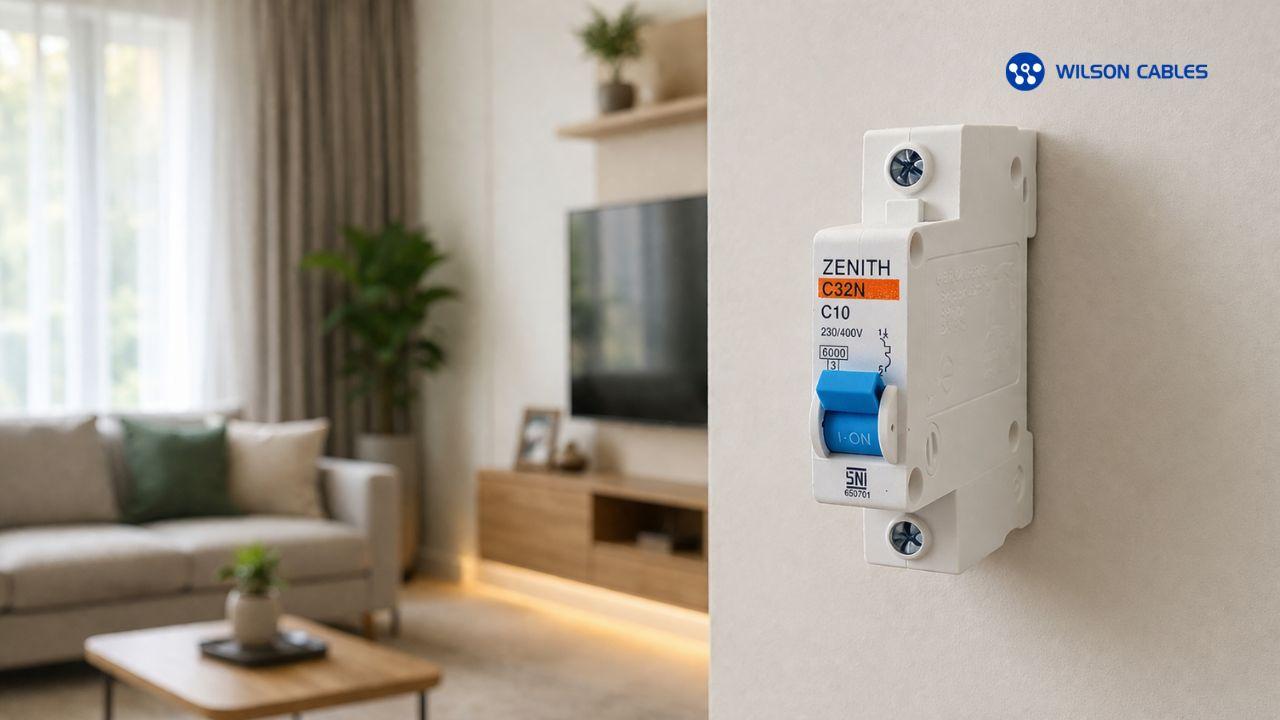
The MCB or Miniature Circuit Breaker is an electrical safety switch that automatically cuts off the power supply when a current surge occurs, and protects installations and equipment from damage or fire.
However, not all MCBs are the same. Each MCB has a different code—such as B, C, D, and CL—which indicates its tripping curve characteristics and sensitivity to current surges. Understanding these codes is crucial for selecting the right MCB for your electrical needs, whether at home, in the office, or in industrial settings.
In this article, Wilson Cables will discuss the differences between MCBs B, C, D, and CL, how to read the tripping curve, and tips for choosing the right MCB, along with high-quality electrical cable solutions from Wilson Cables.
A tripping curve is a graph that shows how many times the MCB’s rated current will cause it to trip (cut off the current). This curve helps determine when the MCB will activate during a current surge.
You can select an MCB suitable for light loads, standard loads, or heavy industrial loads by understanding the tripping curve
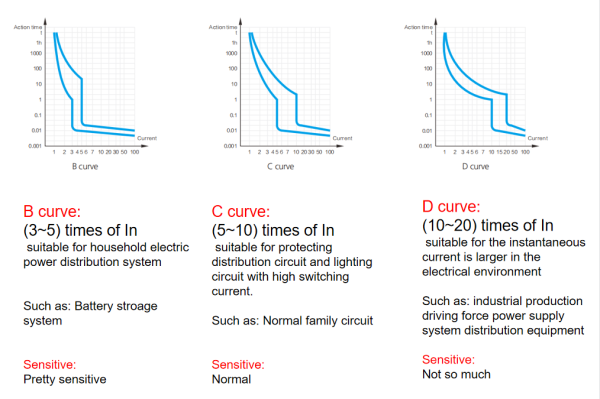
Image source: onccy.com
The following are the characteristics of each MCB type:
Example: A 2A Type B MCB will trip when the current reaches 6–10A.
Example: A 2A Type C MCB will trip when the current reaches 10–20A.
Example: A 2A Type D MCB will trip if the current reaches 20–40A.
Example: A 2A Type CL MCB will trip when the current reaches 8–12A.
| MCB Type | Tripping Curve | Trip Speed | Uses |
| B | 3 - 5 | Fast | Lights, household electronics |
| C | 5 - 10 | Medium | Home, office, additional MCB |
| D | 10 - 20 | Slow | Big motors, heavy industry |
| CL | 4 - 6 | Fast, more sensitive | PLN main installation, sensitive equipment |
In addition to relying on the rated current, an MCB also has a trip time setting. This means that the MCB does not immediately cut off the current once the rated current is reached. For example, a 2A MCB is carrying a current of 2A. In a Type C MCB, the trip may not occur for up to 10,000 seconds, or about 2.7 hours. The MCB waits for a specific period before breaking the circuit, as per the factory settings.
This function is crucial to prevent the MCB from tripping too quickly due to temporary current surges, such as when turning on lights, a refrigerator, or an air conditioner. Consequently, the electrical installation remains stable, and equipment is protected from unnecessary disruptions.
Choosing the right MCB is essential to ensure that the electrical installation is safe and efficient, and that electrical devices are protected from current surges. Here are some guidelines to help you determine the MCB that best suits your electrical needs at home, in the office, or in an industrial setting.
The first step is to understand the electrical load that needs to be protected. Here is a classification based on electrical load:
The rated current is also important to consider in addition to the MCB type. The rated current must be matched to the total electrical load so that the MCB can operate optimally and provide maximum protection for the electrical installation.
Selecting high-quality MCBs is essential. MCBs that meet safety standards ensure maximum protection and a long service life. Avoid cheap, uncertified MCBs, as they can damage equipment or even pose a fire hazard.
Finally, always consult a professional technician regarding the installation of an MCB. Proper installation by a qualified professional ensures that the electrical system is safe, functions optimally, and complies with PLN standards and other national standards.
Each type of MCB has different characteristics and functions. Type B MCBs trip quickly in response to small surges and are suitable for light loads such as lights or household electronics. Type C MCBs are more flexible and resistant to momentary surges, making them ideal for homes, offices, or as supplementary MCBs. Type D MCBs have a slow trip, making them suitable for heavy loads such as industrial motors. Meanwhile, Type CL MCBs are more sensitive than Type C and are often used by PLN for main installations and sensitive electrical equipment.
In addition to choosing the right MCB, an electrical system also requires high-quality electrical cables to ensure a safe and durable installation.
Wilson Cables offers a variety of cable types, such as NYM, NYY, and NYA cables, suitable for homes, offices, and industrial settings. By using high-quality cables from Wilson Cables, your electrical installation becomes safer, more efficient, and longer-lasting. Maximum protection from the right MCB combined with high-quality cables ensures your electrical system operates optimally at all times.
Choosing the right MCB is crucial for a safe and efficient electrical installation. Combined with high-quality cables from Wilson Cables, your electrical system will be protected from power surges, be durable, and operate optimally at all times—whether in homes, offices, or industrial settings.
|
Wilson Cables is a trusted electrical cable brand produced by PT. Willson Surya Unggul, a cable manufacture company in Tangerang, Indonesia, which has been established since 1989. Since the beginning, we have been fully committed to producing high quality cables with a choice of products from building cables, automotive cables, audio cables, electronic cables, to cables for use. special.
|
Our Location
Jl. Veteran No.9A, Kadu Jaya, Kec. Curug, Tangerang, Banten 15810
 021-5986868 / 0856-8686868
|
Sitemap
|
Download Our Product Catalog
Download |

|


