
  |

|
 SHOP NOW SHOP NOW |

|
|

|
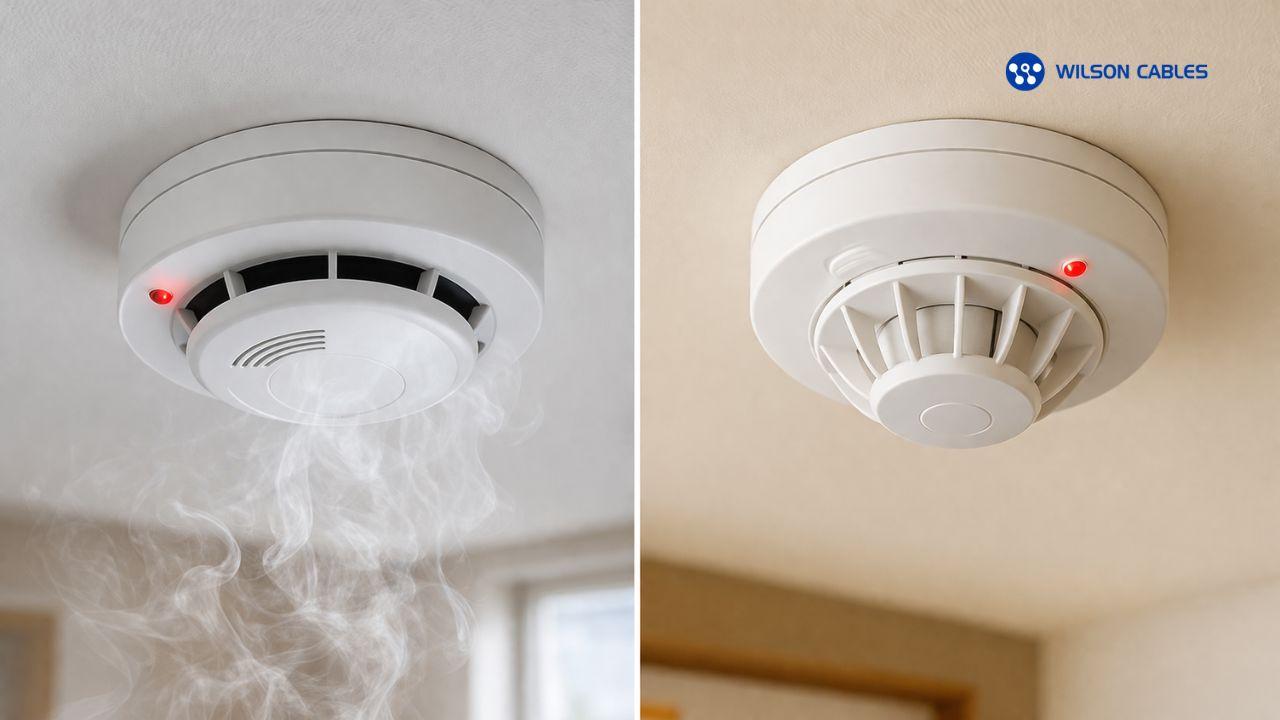
Fire detection systems are one of the most important elements in building safety, whether in homes, office buildings, warehouses, factories, or commercial areas. When a potential fire is detected quickly, there is a greater chance of preventing damage, saving assets, and avoiding fatal risks. The two sensors most commonly used in fire detection systems are smoke detectors and heat detectors.
Although they look similar, smoke detectors and heat detectors have different operating mechanisms, sensitivities, and application areas. Understanding the differences between the two is crucial for determining the right type of detector for each room. In addition, the quality of installation is also influenced by the choice of cables, especially fire-resistant cables that must continue to work under extreme conditions. Wilson Cables offers international standard fire-resistant cable solutions designed to support fire detection systems safely and reliably.
This article will discuss in detail the differences between smoke detectors and heat detectors, how they work, recommended areas of use, and recommendations for the best fire-resistant cables from Wilson Cables.
A smoke detector is a device designed to detect the presence of smoke as an early indicator of a fire. These sensors are highly sensitive to changes in air quality. Most fires start with smoke before the flames spread, making smoke detectors the ideal choice for early detection.
Smoke detectors are very suitable for use in areas that require early detection of smoke.
Unlike smoke detectors, heat detectors work by detecting temperature increases as a sign of a potential fire. Heat detectors identify dangerous conditions based on increases in room temperature, rather than smoke detection.
Heat detectors are suitable for rooms with a potential for false alarms when using smoke detectors.
| Description | Smoke Detector | Heat Detector |
| How It Works | Detects the presence of smoke particles in the air. | Detects a significant rise in temperature. |
| Sensitivity | Highly sensitive to small smoke particles. | More sensitive to heat changes than to smoke. |
| Detection Speed | Provides the earliest warning (before the fire grows). | Tends to be slower because it waits for the room temperature to rise. |
| Application Locations | Dry, clean, and smoke-free rooms (bedrooms, offices). | Kitchens, garages, or damp and dusty areas. |
| Risk of False Alarms | Higher (can be triggered by cigarettes, steam, or thick dust). | Lower (very stable and rarely gives false alarms). |
There is no right or wrong choice because both have different functions. The type of detector should be determined based on the characteristics of the room:
In large buildings such as apartments, hotels, and office buildings, a combination of smoke detectors and heat detectors is necessary for the detection system to work optimally in accordance with safety standards.
In addition to choosing the right type of detector, a fire alarm system will not work optimally without fire-resistant cables designed to maintain communication functions during a fire.
Cables for smoke detector, heat detector, and entire fire alarm system installations, Wilson Cables offers the following product:

This cable is designed to remain functional even in fire conditions. Made with fire-resistant insulation and international quality standards, the N2XY-FRC cable is ideal for:
Installations using Wilson Cables fire-resistant cables ensure that fire detection systems operate safely, stably, and remain active in critical conditions.
Smoke detectors and heat detectors are two crucial devices in fire detection systems. Smoke detectors provide the earliest detection based on smoke, while heat detectors are more stable for areas that generate significant heat or non-fire-related smoke. The selection of appropriate detectors must be tailored to the characteristics of the room and safety standards.
In addition to sensor selection, a reliable fire detection system also requires high-quality fire-resistant cables. Wilson Cables' N2XY-FRC product provides the protection and reliability needed to keep fire alarm systems functioning in extreme conditions, ensuring building safety.
Whether you are building or upgrading your building's fire safety system, be sure to choose the right detectors and always use Wilson Cables' fire-resistant cables for safe, strong, and high-standard results.
|
Wilson Cables is a trusted electrical cable brand produced by PT. Willson Surya Unggul, a cable manufacture company in Tangerang, Indonesia, which has been established since 1989. Since the beginning, we have been fully committed to producing high quality cables with a choice of products from building cables, automotive cables, audio cables, electronic cables, to cables for use. special.
|
Our Location
Jl. Veteran No.9A, Kadu Jaya, Kec. Curug, Tangerang, Banten 15810
 021-5986868 / 0856-8686868
|
Sitemap
|
Download Our Product Catalog
Download |

|


