
  |

|
 SHOP NOW SHOP NOW |

|
|

|
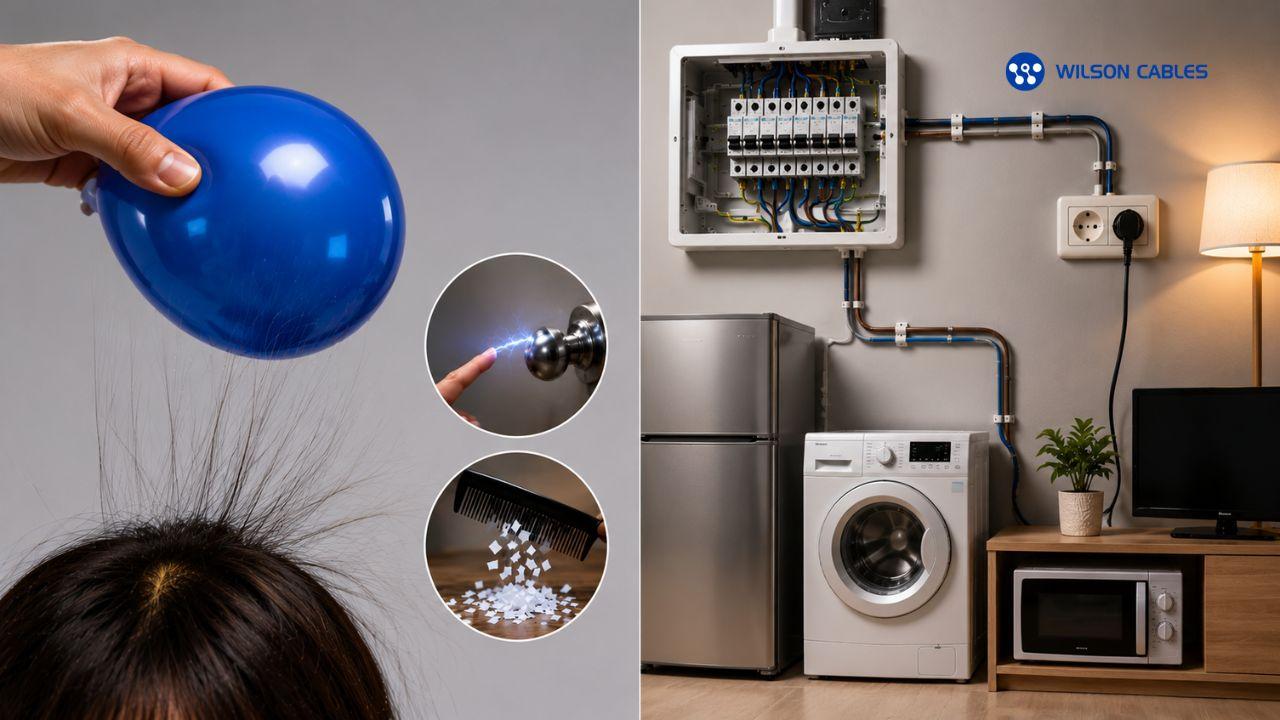
Electricity has become an integral part of our daily lives. Almost all modern activities today rely on electrical energy, from turning on lights and charging smartphones to operating industrial machinery. In the field of electrical engineering, electricity is categorized into two main types: static electricity and dynamic electricity.
Even though both involve electric charges, they have different mechanisms, characteristics, and functions. Therefore, it is important to understand the differences between static and dynamic electricity to ensure the safe and efficient use of electrical energy.
Static electricity is a collection of stationary or non-flowing electric charges. These charges typically arise from friction between two objects of different types. When friction occurs, electrons can move from one object to another, thereby creating an electric charge.
Static electricity is generally temporary and does not require a conductor, such as a wire, to occur.
Here are some key characteristics of static electricity:
When a plastic ruler is rubbed against hair or fabric, it becomes electrically charged and can attract a small piece of paper.
A balloon rubbed against hair can stick to a wall due to static electricity.
Friction between hair and clothing can generate static electricity, causing the hair to stand on end.
Lightning is a natural example of static electricity resulting from differences in electrical charge in the atmosphere.
Dynamic electricity is electricity that flows through a conductor in an electrical circuit. This type of electricity is used to power various electronic devices and electrical installations.
Unlike static electricity, dynamic electricity requires a conductor, such as an electrical cable, for current to flow from the source to the electronic device.
Some characteristics of dynamic electricity include:
A power source generates electrical energy, such as a battery, generator, or the power grid.
Electrical wires are used to carry electrical current from the power source to electronic devices.
An electrical load is a device that uses electrical energy, such as a light bulb, television, and industrial machinery.
Lights turn on because of the flow of electric current through the wiring.
A charger delivers electric current to a smartphone’s battery.
Refrigerators, televisions, fans, and washing machines operate using dynamic electricity.
Various machines in factories use electric current to carry out production operations.
In order to make it easier to understand, here is a table showing the differences between static and dynamic electricity:
| Description | Static Electricity | Dynamic Electricity |
|
Definition |
Stationary electric charge |
Flowing electric charge |
|
Sources |
Friction between objects |
Source of electrical energy |
|
Current Flow |
Does not flow |
Flows through conductors |
|
Conductive Media |
Does not require wires |
Requires wires |
|
Duration |
Temporary |
Can be continuous |
|
Examples |
The balloon sticks to the wall |
The light turns on |
|
Applications |
Natural phenomenon |
Used in electronic devices |
Static electricity can pose several risks, such as:
In certain industries, static electricity must be controlled because it can trigger fires or explosions.
Dynamic electricity also poses risks if the installation is not done correctly, such as:
Therefore, the use of high-quality cables and installation in accordance with standards is very important.
The difference between static and dynamic electricity lies in the movement of their electric charges. Static electricity consists of stationary electric charges and typically arises from friction, whereas dynamic electricity is an electric current flowing through conductors such as electrical cables.
They have different examples and functions in daily life. Dynamic electricity is the most widely used type for both household and industrial needs because it can continuously deliver energy.
However, to ensure the safe use of dynamic electricity, it is essential to use high-quality electrical cables and installations that meet standards so that the electrical system operates optimally and safely.
|
Wilson Cables is a trusted electrical cable brand produced by PT. Willson Surya Unggul, a cable manufacture company in Tangerang, Indonesia, which has been established since 1989. Since the beginning, we have been fully committed to producing high quality cables with a choice of products from building cables, automotive cables, audio cables, electronic cables, to cables for use. special.
|
Our Location
Jl. Veteran No.9A, Kadu Jaya, Kec. Curug, Tangerang, Banten 15810
 021-5986868 / 0856-8686868
|
Sitemap
|
Download Our Product Catalog
Download |

|


