
  |

|
 SHOP NOW SHOP NOW |

|
|

|
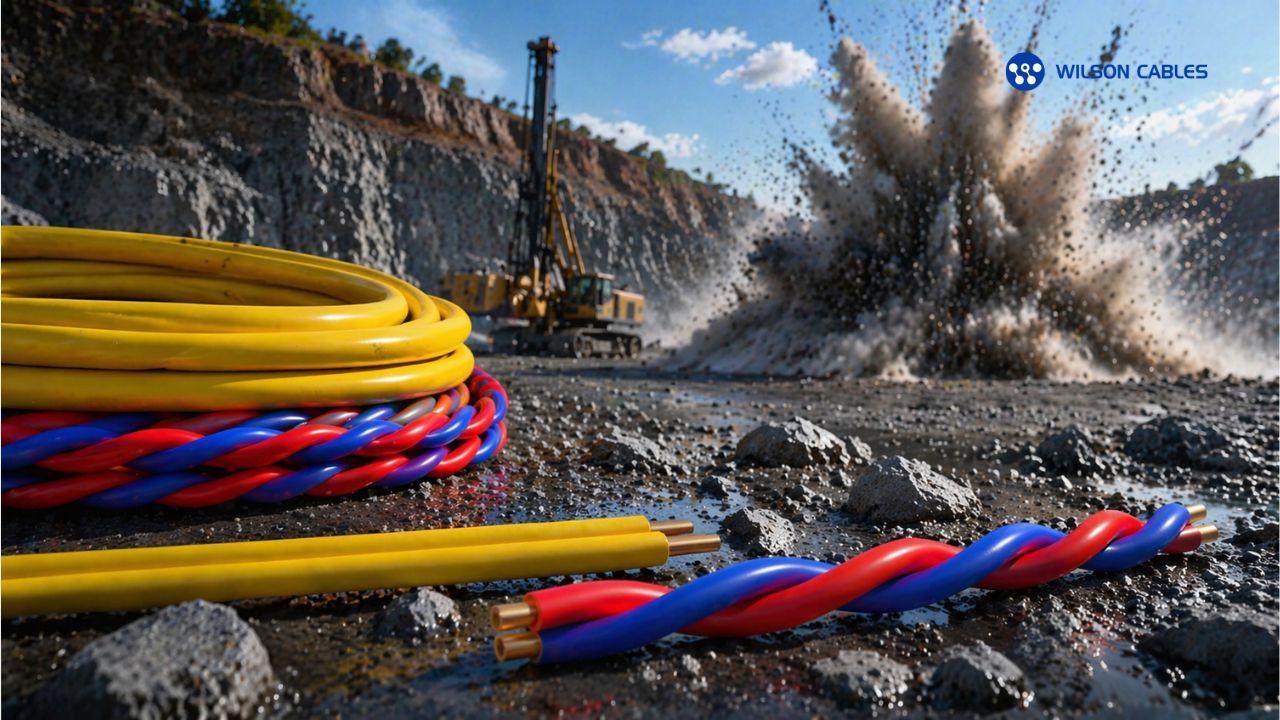
In various industrial activities such as mining and construction, blasting is often used to break up rock or remove large quantities of material. To ensure these processes proceed safely and under control, a properly designed blasting system is required. One of the key components of such a system is the blasting cable.
Blasting cables serve as a medium for conducting electrical current, connecting the power source to the detonator or blasting trigger device. Without the right, high-quality cables, the detonation process will not function properly and may even pose safety risks.
This article will provide a comprehensive overview of the definition of blasting cables, their primary functions, the types commonly used, and their applications across various industrial sectors.
In modern blasting systems, blasting cables play a crucial role by ensuring that electrical current flows steadily and at the right time. This is essential for ensuring that the blasting process proceeds according to the established plan.
Blasting cables are typically designed with specific specifications to function effectively in harsh field conditions. Work environments such as mining sites or quarries often involve extreme conditions, including exposure to water, soil, mechanical stress, and friction against rock. Therefore, blasting cables must possess excellent durability and robust insulation.
Additionally, the use of blasting cables must adhere to strict safety procedures. This is done to prevent detonation failures, disruptions in the blasting circuit, and other potential hazards that may occur during the blasting process.
Generally, blasting cables serve the primary function of conducting electrical current within the blasting system. However, in practice, these cables perform several other critical functions that support the smooth operation of the blasting process.
The primary function of blasting cable is to connect the blasting machine to the detonator. The blasting machine is a device that generates an electric current to trigger the detonator.
The blasting cable acts as a conductor that allows the electrical current from the blasting machine to reach the detonator attached to the explosive.
The blasting cable also serves to convey a stable electrical current to the detonator. When the electrical current flows through the cable, the detonator activates and triggers the installed explosive.
The stability of the electrical current is crucial in this process. If the current is not properly transmitted, the detonator may fail to function or result in an explosion that deviates from the plan.
In addition to conducting electricity, blasting cables also help ensure that the blasting system operates safely and in a controlled manner. Using cables that meet standards can make the detonation process more precise and in accordance with the designed sequence.
This is particularly important in industries such as mining, where blasting must be carried out carefully to avoid endangering workers or nearby equipment.
Blasting cables consist of several main components designed to ensure optimal and safe electrical current transmission.
The conductor is the core component of the cable that carries the electrical current. In blasting cables, the conductor is typically made of copper due to its excellent electrical conductivity.
This material is also sufficiently flexible, allowing it to be used in various field conditions without breaking easily.
Cable insulation serves as a protective layer that wraps around the conductor. This layer prevents electrical current leakage and protects the cable from damage caused by environmental conditions.
Insulation in blasting cables is usually made of materials resistant to water, heat, and friction with rocks or soil.
In addition to the primary insulation, some blasting cables are also equipped with an external protective sheath. This layer provides additional protection against mechanical stress, impacts, or friction in the work area.
The external protective sheath helps enhance the cable’s durability, allowing it to be used in harsh environmental conditions.
Blasting cables are widely used in various industrial sectors that utilize blasting methods to break up materials or demolish specific structures.
In the mining industry, cable blasting is used to break up hard rock and clear paths for excavating mining materials. The blasting process allows large rocks to be broken down into smaller pieces, making them easier to transport and process.
The use of cable blasting in mining must be carried out with careful planning to ensure that the blasting process remains safe and efficient.
In the construction sector, cable blasting is used in the demolition of structures or the construction of large-scale projects. For example, in the demolition of old buildings, tunnels, or excavation work on infrastructure projects.
Blasting techniques are often chosen because they can accelerate the work process compared to manual methods
Because they are directly related to blasting systems, blasting cables must be used in accordance with strict safety standards.
Before use, blasting cables must be inspected to ensure there is no damage to the conductors or insulation. Damaged cables can interfere with the detonation process.
Blasting cable installation must be performed by personnel with experience and a thorough understanding of blasting procedures. Improper installation can result in detonation failure or even workplace accidents.
During the installation process, the blasting cable route must be protected from being run over by heavy equipment or coming into contact with sharp objects. Damage to the cable can disrupt the flow of electrical current to the detonator.
Selecting the right blasting cable is crucial to ensuring that the blasting system operates safely and efficiently.
Choose blasting cables that use high-quality conductors, such as copper. This material conducts electrical current effectively and offers high resistance to various environmental conditions.
The cable insulation must be resistant to water, heat, and friction. Strong insulation protects the conductor from damage and helps maintain electrical current stability.
Work areas such as mines and quarries have harsh environmental conditions. Therefore, the blasting cables used should have high resistance to pressure, humidity, and other field conditions.
The selection of blasting cables must not be done haphazardly to ensure that the blasting system operates safely and optimally. The cables must have high conductivity, strong insulation, and resistance to extreme environmental conditions such as pressure, humidity, and friction.
Wilson Cables, a trusted cable manufacturer, also provides cable solutions for specialized needs, including blasting cables designed for heavy-duty industrial applications such as mining and construction. Blasting cables fall under Wilson Cables’ specialty cable category and are manufactured to high-quality standards, using premium copper conductors and insulation that protects the cables from various on-site hazards.


Through the support of modern manufacturing technology and strict quality standards, Wilson Cables’ blasting cables deliver stable, safe, and reliable performance to support precise and controlled blasting systems.
Choosing blasting cables from Wilson Cables means you’re investing in safety, efficiency, and operational success in the field.
|
Wilson Cables is a trusted electrical cable brand produced by PT. Willson Surya Unggul, a cable manufacture company in Tangerang, Indonesia, which has been established since 1989. Since the beginning, we have been fully committed to producing high quality cables with a choice of products from building cables, automotive cables, audio cables, electronic cables, to cables for use. special.
|
Our Location
Jl. Veteran No.9A, Kadu Jaya, Kec. Curug, Tangerang, Banten 15810
 021-5986868 / 0856-8686868
|
Sitemap
|
Download Our Product Catalog
Download |

|


