
  |

|
 SHOP NOW |

|
|

|
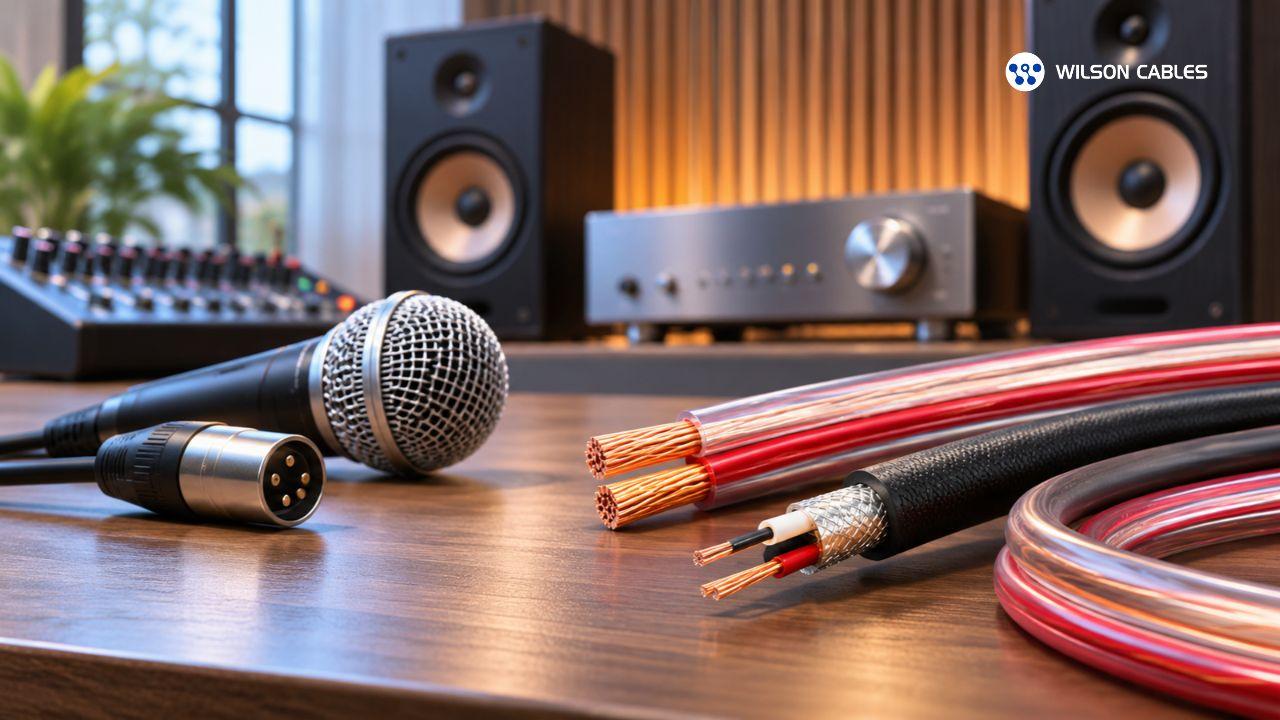
People judge a sound system by the parts they can see: speakers, amplifiers, microphones, or the car stereo. The cables that connect everything are almost never considered, even though every bit of sound has to pass through them before it reaches your ears.
This is where cable quality quietly shapes the final result. A good cable doesn’t add anything to the sound. Its job is to pass the signal along as completely as possible, without losing power and without picking up interference. The less you notice it doing its job, the clearer the sound you hear.
This article explains how audio cables affect sound quality, based on science rather than myths, and how to choose the right cable for your needs.
There are two extreme views about audio cables. Some people believe expensive cables can "magically" make sound warmer or more detailed. Others think all cables are the same as long as they connect. Neither is quite right.
The truth lies somewhere in between, and it can be measured. A cable can’t create sound quality. It can only protect or spoil the sound that is already there. A good cable keeps three things to a minimum: lost power, unwanted noise, and unstable connections.
So the right question isn’t "Does this cable make the sound better?" but "Does this cable let the sound arrive without losing anything?" The three points below explain where the real differences come from.
Speaker cables carry sound that has already been boosted by the amplifier, so they handle quite a lot of power. Here, the main enemy is resistance, meaning how much the cable holds back the flow of electricity. The more a cable holds back, the more power turns into heat before it reaches the speaker.
Two things decide this: how thick the metal inside the cable is, and how long the cable is. A cable that is too thin for a long distance reduces power and weakens the amplifier’s control over the speaker’s movement, especially on bass notes. The result is bass that sounds soft and muddy, and less detail overall.
The rule of thumb is simple: the longer the distance and the more powerful the system, the thicker the cable you need. For this, Wilson Cables offers Speaker Cable in sizes from 2×0.3 to 2×0.75 mm², and Transparent Audio Cable in a wider range, from 2×20 to 2×120, so you can match the cable to anything from a small setup to a more demanding system.
In microphone cables, the sound signal is much weaker than in speaker cables, only a tiny fraction of a volt. Because it has to be boosted many times over, any small interference that sneaks in gets boosted too. This is where the humming, hissing, and buzzing that often spoil recordings and sound systems come from.
This interference comes from the electrical activity all around us: power cables, lights, chargers and adapters, even radio signals. This is where the cable’s protective layer, called shielding, comes in. A tight shield catches this interference and sends it safely away before it can mix with the sound, so background noise stays low and the sound stays clean.
For this, Wilson Cables has a range designed for specific uses: Stereo Microphone Cable (2C × 20/0.12 mm) for two-channel use in recording, live sound, and post-production; Mono Microphone Cable (1C × 26/0.10 mm) for single microphones; and Shield Wire (2C × 10/0.12 mm), a shielded cable for installations prone to interference. The difference between two-channel and single-channel sound is explained further in stereo vs mono audio.
The third point is talked about less often, but it decides how long good sound will last. The copper inside the cable needs to be pure and consistent. Impurities and tiny air gaps make it harder for electricity to flow and make the cable perform unevenly along its length.
How the cable is built also matters. Many fine copper strands make a cable flexible and able to handle repeated bending. This is essential for microphone cables that are moved around often, so they don’t break easily or make crackling sounds when handled. At the ends, neat and secure connections prevent rust and corrosion, which slowly make it harder for the signal to pass through over time.
One thing you should never compromise on is safety. Low-quality audio cables don’t just make the sound worse. They also increase the risk of an electrical short circuit. Wilson Cables audio products are made under an ISO 9001:2015 certified quality system, so their materials and safety stay consistent.
The right cable is the one that suits the job, not the most expensive one. Here is a quick guide to matching your needs with the Wilson Cables audio cable range:
|
What You Need |
Wilson Cable Type |
Notes |
|
Car audio, home speakers, home theater |
Transparent Audio Cable |
Wide range of sizes; choose a thicker cable for long distances or powerful systems |
|
Small speaker setups |
Speaker Cable |
Practical for standard stereo and home theater setups |
|
Recording, live sound, studio |
Stereo Microphone Cable |
Two channels, shielded for clean sound |
|
Single microphones, simple systems |
Mono Microphone Cable |
Connects directly to a microphone or audio accessory |
|
Installations prone to interference |
Shield Wire |
Shielded cable to block out buzzing and noise |
Whatever you choose, make sure it is installed by a professional for the best and safest results.
Audio cable quality does affect sound quality. Not by adding "color" to the sound, but by keeping the signal complete, free from interference, and stable over time. Choosing the right cable thickness, the right shielding, and consistent materials is the most sensible way to protect the sound system you have invested in.
Wilson Cables offers a full range of audio cables, from Speaker Cable and Transparent Audio Cable to Microphone Cable and Shield Wire, made to certified quality standards for car, home, and professional audio.
Not sure which size or type is right for you? Browse all the options on the Wilson Cables Audio Cables page, or contact our team for installation advice.
|
Wilson Cables is a trusted electrical cable brand produced by PT. Willson Surya Unggul, a cable manufacture company in Tangerang, Indonesia, which has been established since 1989. Since the beginning, we have been fully committed to producing high quality cables with a choice of products from building cables, automotive cables, audio cables, electronic cables, to cables for use. special.
|
Our Location
Jl. Veteran No.9A, Kadu Jaya, Kec. Curug, Tangerang, Banten 15810
 021-5986868 / 0856-8686868
|
Sitemap
|
Download Our Product Catalog
Download |

|


