
  |

|
 SHOP NOW |

|
|

|
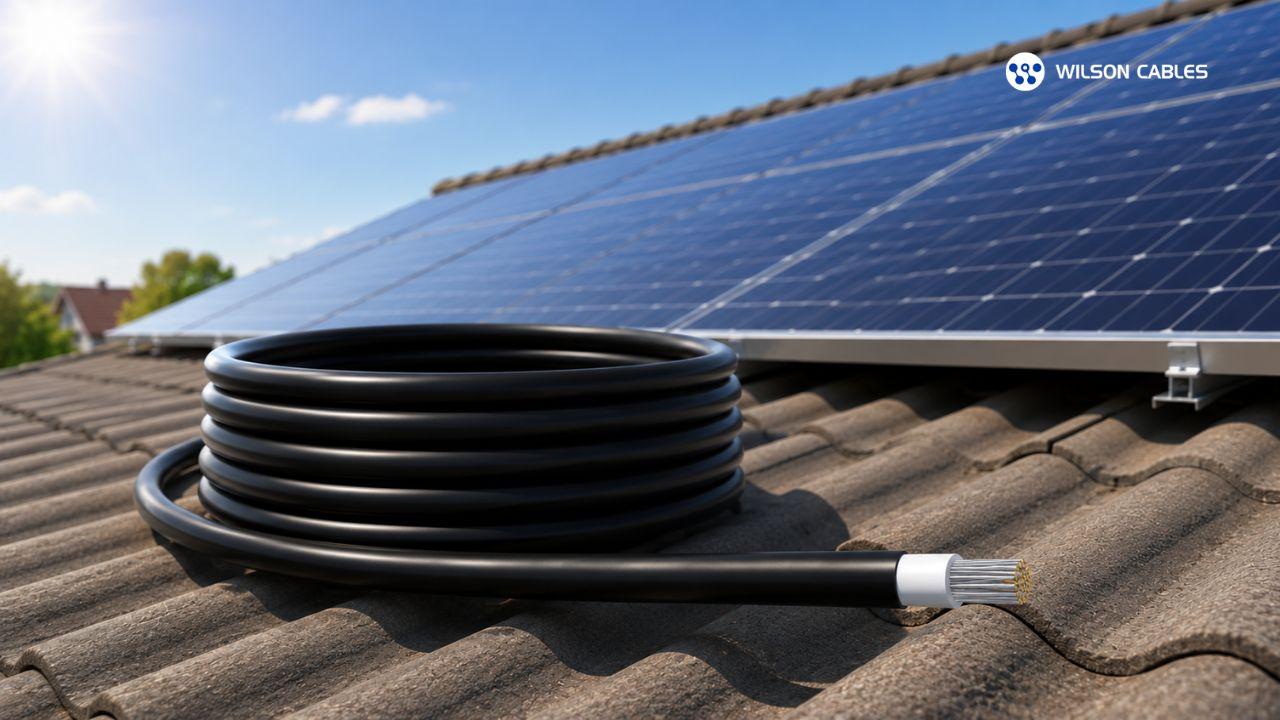
Solar photovoltaic (PV) systems are becoming more common in Indonesia, from homes and commercial buildings to industrial sites. As interest in renewable energy grows, it is increasingly important to understand every supporting component, including the type of cable used in the installation.
Some people still assume that solar installations can use ordinary building wire such as NYAF. More recently, NYY cable has also been treated as a substitute for solar cable, or PV cable, because both have relatively thick protective layers and can be installed outdoors under certain conditions. NYY is also easy to find and may appear more economical.
However, NYY cable and solar cable have different purposes, standards, and performance characteristics. Using a cable outside its intended application can affect the safety, efficiency, and service life of a PV system. So, why is NYY cable not recommended as a replacement for PV cable on the DC side?
A common myth is that NYY cable can replace purpose-designed solar cable because the two products may look similar from the outside.
The usual reasons include:
These reasons may sound sensible at first. In practice, however, a solar PV system operates under different electrical and environmental conditions from a conventional building installation. Cable selection must therefore follow the design requirements and applicable standards of the PV system.

NYY is a type of power cable commonly used in buildings and infrastructure. It normally has a copper conductor, PVC insulation, and a PVC outer sheath, giving it more mechanical and environmental protection than some single-layer building wires.
With suitable protection and installation methods, NYY cable can be used for fixed wiring indoors or outdoors. It is commonly used for power distribution in houses, commercial buildings, factories, and protected underground routes.
However, NYY is primarily intended for fixed low-voltage power distribution. It is not a purpose-designed PV cable for exposed DC string circuits.

Solar cable, also called photovoltaic or PV cable, is designed specifically for solar PV systems. It carries direct current (DC) from the solar panels to the inverter, combiner box, charge controller, or other equipment.
Unlike ordinary installation cable, solar cable must withstand harsh conditions because it is often installed in exposed areas and receives direct sunlight every day.
H1Z2Z2-K is a widely used solar cable designation for PV installations. Cable made to this specification is designed to provide reliable performance and safety during long-term outdoor service.
Although both products conduct electricity, NYY cable and solar cable are designed for different applications.
|
Item |
NYY Cable |
Solar / PV Cable |
|
Typical purpose |
Fixed low-voltage power distribution |
DC circuits in solar PV systems |
|
Main application |
Building and infrastructure installations |
Solar PV installations |
|
UV resistance |
Limited unless specifically rated |
Very good when specified for outdoor PV use |
|
Flame propagation resistance |
Good, depending on the product standard |
Very good, depending on the product standard |
|
Low smoke zero halogen |
No; standard NYY uses PVC |
Yes for H1Z2Z2-K cable with XLPO materials |
|
Operating-temperature range |
Standard fixed-installation range |
Wider range for demanding outdoor PV conditions |
|
Conductor |
Copper (Cu) |
Tinned copper |
|
Insulation / sheath material |
Polyvinyl chloride (PVC) |
Cross-linked polyolefin (XLPO) |
|
Long-term exposed outdoor use |
Requires suitable protection and product rating |
Purpose-designed for outdoor PV exposure |
The table above shows that solar cable is purpose-built for the environmental and operating conditions of PV systems. NYY cable, by contrast, is mainly intended for fixed power distribution in building and infrastructure installations.
There are several reasons why NYY should not automatically replace purpose-designed solar cable on exposed DC circuits.
Solar panels produce direct current (DC). DC fault arcs can behave differently from AC faults, so the cable, connectors, protective devices, and installation method must be suitable for the system voltage, current, and applicable PV standards.
Solar cable is constructed and rated for long-term operation in PV DC circuits when correctly selected and installed.
Much of the cable in a solar installation is placed on rooftops or in open areas, where it is continuously exposed to sunlight, rain, humidity, and temperature changes.
Purpose-designed solar cable provides UV and weather resistance that may not be part of the standard rating of every NYY product.
Environmental exposure can cause unsuitable insulation or sheathing materials to degrade more quickly. Over time, this may increase maintenance needs and lead to early cable replacement.
Voltage drop in a PV circuit depends mainly on current, conductor size, route length, temperature, and installation method. Selecting a properly rated PV cable in the correct size helps keep energy losses within the system design limit.
A professional solar installation should follow the applicable standards, project design, and manufacturer instructions. Using the specified solar cable helps the system operate safely, reliably, and efficiently over the long term.
No. NYY is an electrical power cable and may be suitable for certain fixed power-distribution sections of a PV project when it is correctly sized, properly protected, and permitted by the system design and local requirements.
However, NYY should not automatically be used as a substitute for certified PV cable on exposed DC string circuits. Those circuits require cable selected for the system voltage and current, UV exposure, temperature range, outdoor conditions, and long-term DC service.
For professional installations, following the cable specification in the approved design is the safer and more reliable approach.
Solar cable is normally used in the following parts of a PV installation:
Solar cable carries DC power from the solar panels toward the inverter.
In an array with several modules, solar cable connects the panels to form a string or another designed circuit arrangement.
Residential and commercial rooftop systems need solar cable that can withstand outdoor weather throughout the year.
In large solar power plants, solar cable connects and collects power from many PV modules as part of the DC network.
Solar cable is also widely used in stand-alone systems in remote areas, farms, fishponds, and locations without access to the main electricity grid.
Cable selection for a solar installation should not be based only on price or availability. The designer and installer must also consider the circuit function, system voltage and current, conductor size, route length, environmental conditions, product standards, and expected service life.
Using cable that is designed and rated for the specific PV circuit helps protect the installation, limit energy loss, and reduce the risk of premature failure.
To learn more about suitable solar cable and the specification of Wilson H1Z2Z2-K Solar Cable, see the product information and related articles from Wilson Cables.
NYY cable and solar cable serve different purposes. NYY is mainly used for fixed low-voltage power distribution, while purpose-designed solar cable is made for the exposed DC circuits of a PV system.
Standards-compliant solar cable provides suitable protection against UV radiation, temperature extremes, moisture, and long-term outdoor exposure. For the DC side of a PV array, use the cable specified by the system designer and required by the applicable standards so the installation can operate safely and reliably.
NYY may be suitable for certain protected or AC-side power-distribution sections if the approved design and local requirements allow it. It should not automatically replace purpose-designed PV cable on exposed DC string circuits.
NYY is mainly a fixed power-distribution cable with PVC insulation and sheath. Solar cable is designed for PV DC circuits and long-term exposure to UV radiation, temperature changes, and outdoor weather.
Solar panels produce DC power and can operate at high DC voltages. The cable must be rated for the system voltage, current, temperature, environment, and expected service life, while also complying with the applicable PV standards.
H1Z2Z2-K is a solar cable designation used for PV applications. It is designed for demanding outdoor conditions, including UV exposure and a wide operating-temperature range.
Yes. UV resistance is one of the key characteristics of properly specified solar cable, making it suitable for exposed PV installations.
Solar cable is generally used between PV modules, from panel strings toward the inverter or combiner box, and in rooftop, solar-farm, and off-grid DC installations.
|
Wilson Cables is a trusted electrical cable brand produced by PT. Willson Surya Unggul, a cable manufacture company in Tangerang, Indonesia, which has been established since 1989. Since the beginning, we have been fully committed to producing high quality cables with a choice of products from building cables, automotive cables, audio cables, electronic cables, to cables for use. special.
|
Our Location
Jl. Veteran No.9A, Kadu Jaya, Kec. Curug, Tangerang, Banten 15810
 021-5986868 / 0856-8686868
|
Sitemap
|
Download Our Product Catalog
Download |

|


